Preface
Dear friends, before we begin the discussion today. I would like to thank you first for clicking that button and visit our page. I strongly encourage to join us on Instagram where we are most active and build a life long connection with us as this goes way beyond than just a business. Again, thank you for taking the time to read this. Now shall we?
After months of engaging with many tea lovers, especially with those who have just entered the tea world, I found quite a number of tea drinkers asking me the same question, “What does your flavor palette look like?” And my answer has always been “I don’t build a flavor palette”. I believe some are stunned by my answer but herein this article, let's discuss some of the reasons behind my answer. Disclaimer, this article is not to discourage you from building a flavor palette but to understand how and what you should establish your flavor palette based on. We will discuss some of the factors that affect the flavor / aroma in tea.
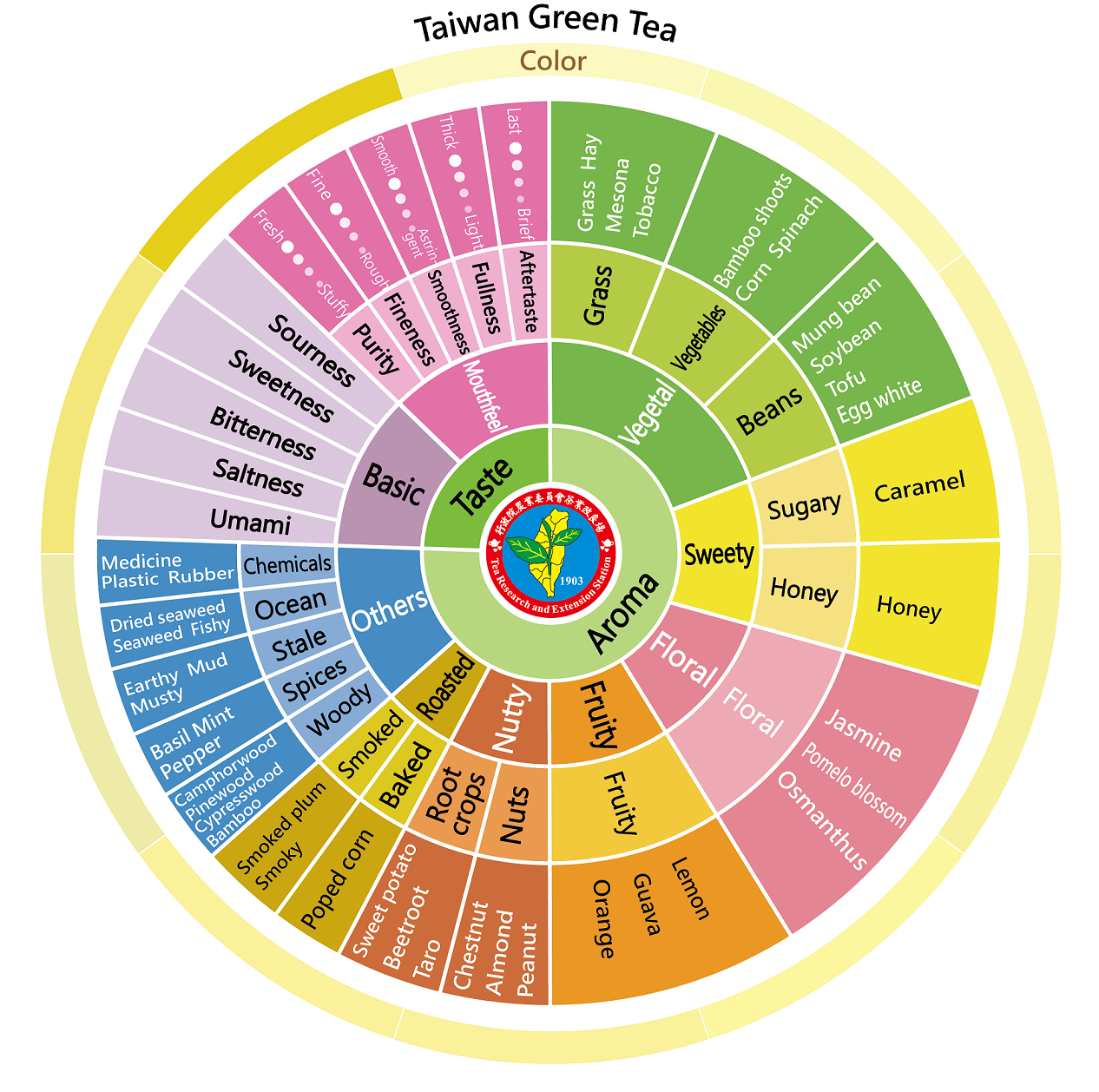
First and foremost, let’s discuss the pros and cons about building a tea flavor palette. I’m sure a lot of people do have a flavor palette created, like what the Taiwan TRES (Tea Research and Extension Station) has on their official website. Note that the TRES flavor wheels are all served as a guide instead of how different tea should taste like. In other words, it is breaking down complex aroma, flavors into words that will be easier for us to express and exchange. In addition, this resource is very useful for people who are more detail oriented so feel free to head to their website and download this.
Now let’s approach the concept of flavor wheel or flavor palette from a roasted and tea maker’s point of view. I myself once too, questioned my father and could not understand why he refuses to establish a flavor palette. Because let’s be honest, if he could establish one, wouldn’t that be better business? The product is probably gonna look a lot more professional where it would be so much easier to promote to consumers in the western world since consumers will have something to based on. However, after moving back to Taiwan from the SF Bay area, I began to have more opportunities to engage with not only Tea but Tea roasting, processing and harvesting. After a year long of engaging with the industry, I could finally understand the reason behind his answer. In sum, such a concept for an experienced tea roaster is too “Vague” since the flavor of a tea could be affected in countless ways. I know at this point you might be thinking, w*f is this dude talking about? Is he telling me that my tea will always taste different and in a sense, he’s saying that there’s no stability in this product? Now again, my answer is yes but no. What I am trying to say is that even with the best production team and roaster, humans are only able to guarantee the quality of a Tea to a certain extent. (please note that we are in the context of high end products only) However, that doesn’t necessarily mean one shouldn’t build a flavor palette. Instead, palette is recommended to be used as a guide to approach tea of different cultivars and of different regions since there are layers of flavor. Below I’ll explain the reason behind the statement above, hoping we could approach this critically.

Taken By- Bobby Wang
This image is subjected to copyright
*Herein, I would like to simplify things. Instead of using the traditional terminology such as Yun, Qi, Aroma, Tongue Taste...ect. Let’s just use the word “Flavor & Fragrance” as a base since we want to make sure it is easy to understand for every reader so we will avoid words that are more composite. *Sorry to my fellow Tea veterans*
It is often said that Tea produced from the Ahlishan linage often carries an orchard-ish fragrance and LiShan linage carries other fragrance. However, if we were to plant a LiShan QingXing Oolong at a lower altitude. Such fragrance might not be present or It might be lightened. Subtle fragrances are also named differently by sellers or consumers due to marketing strategy and many other reasons. Hence, these fragrance are generally named as “Ya Xiang” or “Xiu Xiang” written as 「雅香」and 「秀香」in Chinese. The word “Ya” often refers to “Elegant”. To be more technical, this could also be named as the “Regional” fragrance. Hence, this is where a flavor palette should be introduced and organized. Each cultivar of Tea does carry a base flavor, or should we say, characteristic of its own. Meaning, Oolong in general tastes like Oolong. Pretty simple right? Hence, If one could build a flavor palette off of it, it could serve as a starting point when approaching individual cultivar of different region, altitude, production tea and roaster. Now that we have a starting point, here are the factors that might affect a Tea’s flavor and fragrance.
Altitude
Season
Who process the tea
Who roasted the tea
*In this article I will not cover Altitudinal and Seasonal in detail since I believe most readers are high mountain tea drinkers, thus I do not want to spend too much time on it. As for seasonal, we have already covered that in our previous article so feel free to check it out. (hint, Straight Water Tea) *
Note that I wrote who processed / roasted instead of the process of the tea and the roasting of the tea. The reason is because each production team has their own way of processing tea, like what we mentioned in our previous article, tea is often being carried to different altitudes for final processing. With different altitude comes different weather / environment conditions hence there’s often slight tweak in each phase. And I think I need to be clear at this point. There was never a detailed ABC step when it comes to Tea making. Yes, there is a standard guideline, but each step is being processed differently with different teams. Hence, having a team with different experts for each phrase is vitally important. Only the experienced one is able to notice the slight differences in weather / environment change, hence tweaking the standard technique during these critical times. For instance, a slightly more fermented product will produce an extremely different flavor. Or, An extra 2% of water retention level could possibly affect your storage for up to 6 months.
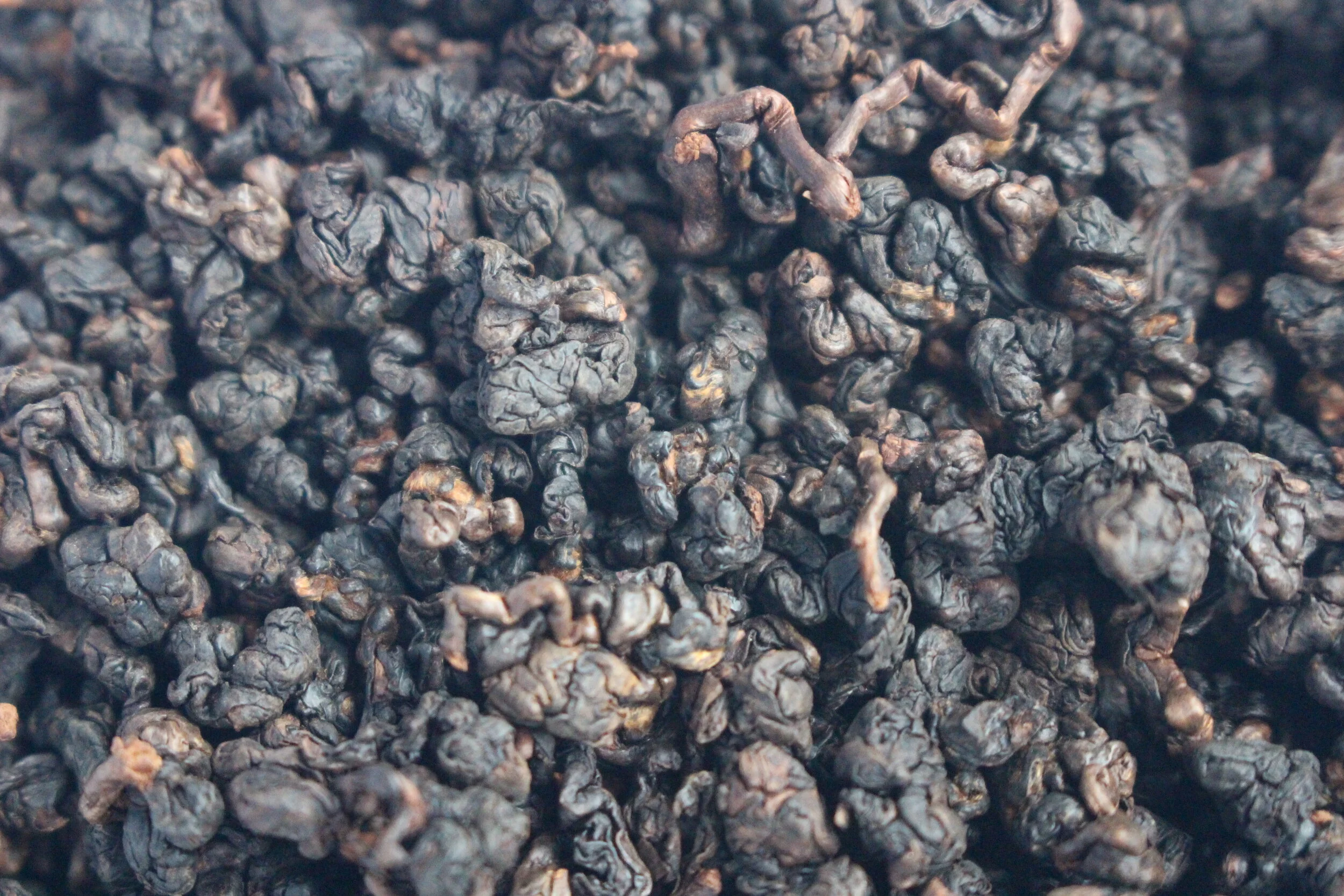
Taken By- Bobby Wang
This image is subjected to copyright
Let’s take Da Yu Ling’s 105K as an example. For those who are not aware of the 105K, I’ll write another article about the rise and fall of 105K when I get a chance.
Back when 105k still existed on the market, 105k was processed slightly differently from the standard procedure. Situated at 2700-2800m of altitude, the weather has never been predictable. My father recalled once while participating in the production, the factory was filled with mist within 15 minutes, hence, affecting the shriveling process. (note that this is back in the day while modern tech was yet to be fully implemented into the production phases). At times, the temperature would drop drastically affecting the moisture level in the space, thus technicians would pour water on the ground, making sure that the tea leaf does not release the water too fast. Hence the challenges that a tea face during production is immense. Especially when it comes to high mountain tea. These little details also contributed to the stability of the tea, hence affecting the flavor and fragrances.
As for roasters, I’m sure there’s nothing much I need to elaborate. Like a cocktail mixer, each roaster of different style and personal technique produces a different product. On top of the layers I mentioned above, roasted tea added yet a new layer/flavor/ fragrance into the existing product. At this point, you probably know why flavor palette is a very useful guide and tool but not something that you should be based on heavily. Not to mention some use a palette to justify a tea. After all, it’s just a tool. That being said, while seeking products of higher ends, stability is important, but with each year’s rainfall plus the everlasting changes of environment on the mountain. Tea farms sometimes encounter a bad season. It could either be the lack of harvest or the excessive rainfall. When bad seasons are encountered, the production team will need to know how exactly they should process the tea in order to produce stability. Sometimes when a good season is encountered, we might be able to produce unique qualities that we have never encountered before. Like what I mentioned at the very beginning of this article, we as humans could only ensure the quality of the tea to a certain level (of course this is restricted within the context of high end quality tea). But at times, mother earth would surprise us. My father could still vividly remember some of the most unique tea he has encountered over the past 30 years. Here I would like to end this article with something that my father said.
“Within the market of high end tea, it is really hard to find unique and good tea in the market, however, for us roasters and farmers, what we seek for is that once in a lifetime type of tea. I once encountered a Spring Ruan Zhi Oolong 25 years ago, and was never able to experience that again because it was that very particular year’s weather that contributed to the product. But that's exactly why tea is a never ending journey and tea is often said to be of spiritual...It’s true.”