Preface
Dear friends, before we begin the discussion today. I would like to thank you first for clicking that button and visit our page. I strongly encourage to join us on Instagram where we are most active and build a life long connection with us as this goes way beyond than just a business. Again, thank you for taking the time to read this. Now shall we?
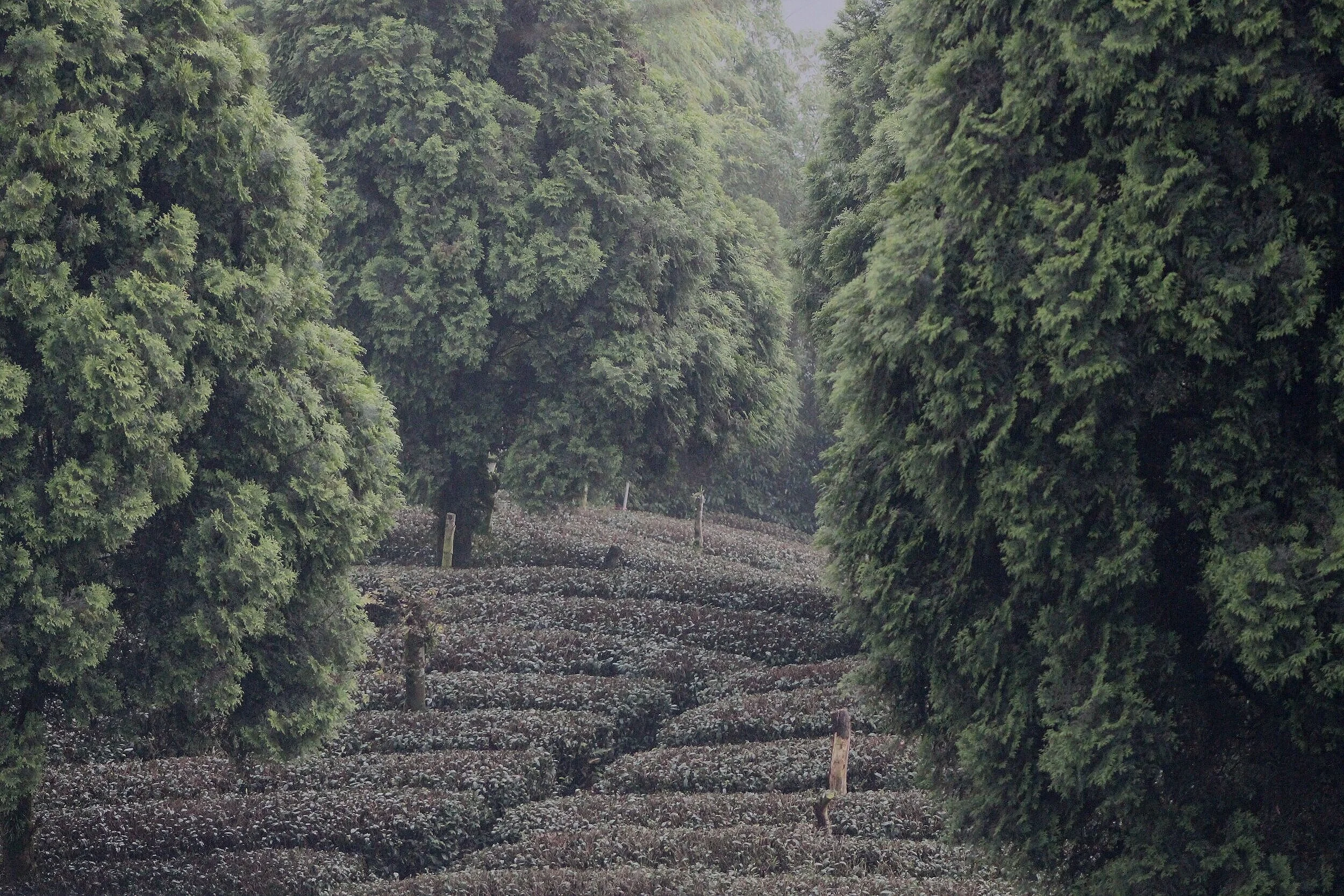
Shan Lin Xi, Taken By- Bobby Wang
This image is subjected to copyright
Today, many conclude the product they purchased as "first hand" or "front line" Gao-Shan Tea (High Mountain Tea) in the western world. Under the catalyze of concepts such as "Farm to Table," majority of the consumers desire to attain "first handed" Taiwanese Tea. Meaning the product is directly from the farm. However, very few understand the phases of how a single batch of Tea is processed from "farm" to "table." Such issues in the Tea industry allow us to discuss why it is barely possible to claim that a single product is directly from the farm. And why, even if it is, there's a high possibility that it might not be what it is claimed to be. In this article, we will approach such issues from various perspectives in order to have a better understanding of the bigger picture.
Heads up, terminologies translated from Taiwanese dialect (Hokkien) into English will often be used in my future article to better understand how things are being called or named locally.
The perspective from Quantity
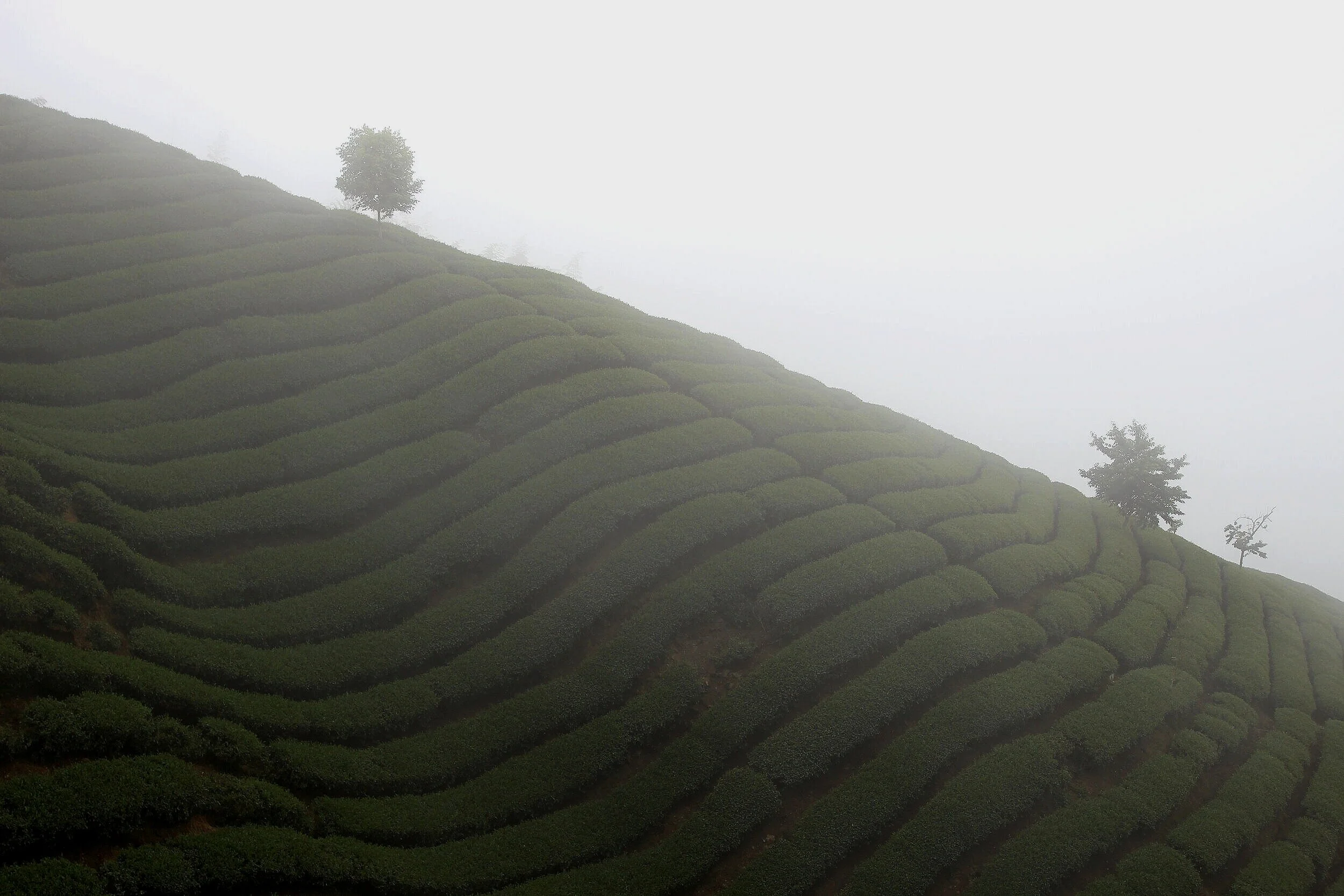
Shan Lin Xi, Taken By- Bobby Wang
This image is subjected to copyright
First and foremost, let's look into the quantity produced by a single farm/region each season. Let's take Shan Lin Xi's "Straight Water Tea" as an example. “Straight Water”, written in Chinese as 「正水」(chinese, Zheng Shui / Hokkien Jia Zui) , also known as 「當季」(Chinese, Dang Ji), referring to Tea that is produced only in either "Spring" or "Winter," are well-known to possess the better quality. Herein, we will again use an unit often implemented in the Taiwanese Tea world, "Fen," also written as 「分」.
(I will also include some of the other units often used in terms of area calculation, please refer to the unit conversion below)
For Metric System Readers:1 Jia(甲) =10 Fen(分) =2934 Ping(坪)=9699.2172m2
1 Fen(分) = 969.92172 m2
For Imperial System Readers:1 Jia(甲) =10 Fen(分) =2934 Ping(坪)=104401.505053 ft²
1 Fen(分) = 10440.1505053 ft²
A single Tea farm under "well management" generally produce :
<Please note that this is only under very sound management, and we will use Oolong planted at 1600m as an example>
Spring :
400 jin of Tea Leaf (Oolong)
also, know as "茶菜 Cha Cai" meaning fresh Tea Leaves
(400x600=240,000g=240Kg) per "Fen" of land.
Winter :
250 jin of Tea Leaf (Oolong)
also, know as "茶菜 Cha Cai " meaning fresh Tea Leaves
(250x600=150,000g=150Kg) per "Fen" of land.
Again, for users who are not familiar with the unit "jin" (written as "斤"), Each Taiwanese jin is 600 grams whereas in China, each jin is 500 grams.
In general, each 5.2~5.5 jin of fresh Tea Leaves will be processed as 1 jin of dried tea, which is the final product. Hence, if we do the math, each "Fen" of tea farm will be able to produce:
* let's use 5.2 jin for Spring and 5.5 jin for Winter*
Spring :400/5.2=76.9~77 jin of dried tea / Fen of land(77x600)/1000=46.2kg / Fen of land
Winter :250/5.5=45.45~46 jin of dried tea / Fen of land(46x600)/1000=27.6kg / Fen of land
At this point, the math seems overwhelming, but I hope you now have a clearer picture. Also, there's much transparent information online for readers who are curious about how big each tea region is in Taiwan; feel free to check it up. However, I will be using the LuGu region (鹿谷) as an example in this article. Another article in regard to the accuracy of the data we generally found online will be written in the future in order to explain why that's not something you should heavily based on. In sum, take the number with a light grain of salt.
Now, let's get back to the topic, using LuGu as an example; based on the data from The Nantou County Government in 2021, about 1,349 hectares (3333.452 Acres) of land is used for Tea Farming.
Each Hectare will be equivalent to approximately 10 Fen. If each fen produce 77 jin (46.2kg Spring) / 46 jin (27.6kg Winter) of dried Tea, 1,349 hectares (3333.452 Acres / 1,3490 fen) produced about :
Spring
77x13490=1,038,730 jin=623,238 Kg
=623.238 Tonnes of dried Tea
=687.0022968 US Tones of dried Tea
Winter
46x13490=620,540 jin=372,324 Kg
=372.324 Tonnes of dried Tea
=410.41695653 US Tones of dried Tea
According to the Taiwan Commercial Times, (2021.06.07, Liu) , the total amount of Tea exported as of April, 2021 (first four months of 2021) summed up to a total of 2,457 Tonnes (2708.3789 US Tones). (Note that this is only at the beginning of the official Spring Tea season plus, we are referring to Tea of the top quality, Shan Lin Xi Linage) Hence we can tell based on our simple calculations above, the demand for high quality Taiwanese Tea are exceptional. For those who are interested in the number of annual exported amount of Taiwanese Tea, there are a lot of good articles online that presents a more accurate number, including problems such as “Importation of Vietnamese and Indian Tea” or “Mixed Tea”. I will too, write about such related topics in the future but in this article, the real problem comes after this since these issues have not only affected the foreign market but have been impacting the local market for the past decade.
Now, with a clearer picture of the quantity produced from a farm, let's dabble into the altitudinal issue.
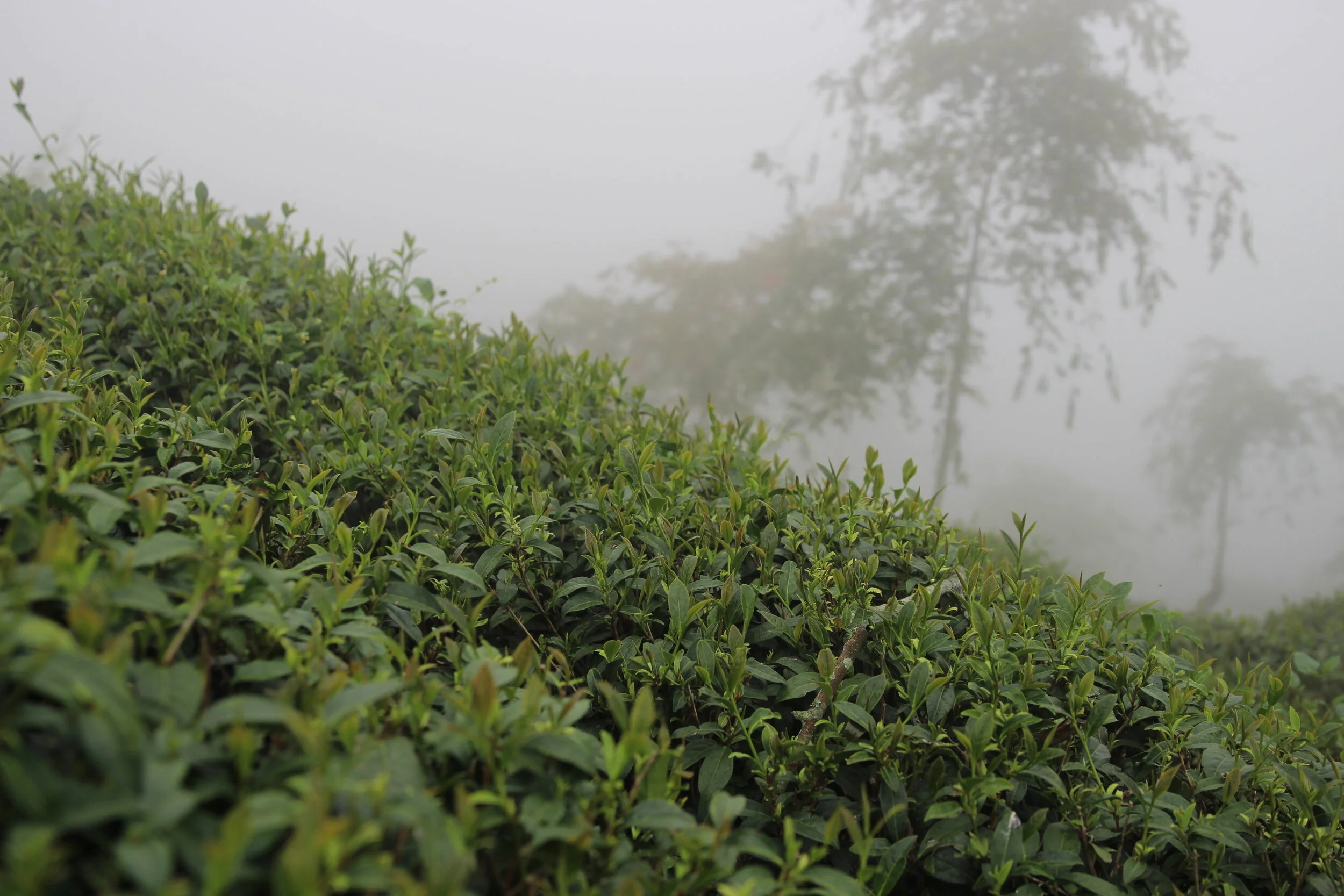
Shan Lin Xi, Taken By- Bobby Wang
This image is subjected to copyright
LuGu's altitude ranges from 500m~1839m. Out of the 1,349 Hectares of land, how many percent of the land is in actual situated at the real "Gao-Shan” (High Mountain) region ?
I believe at this point; you might slightly have a better understanding of the bigger picture. Undoubtedly, based on the math, it is clear that the great disparity of supply and demand for "Straight Water" Gao Shan(High Mountain) Tea has been the norm over the past few decades. Such phenomena also induce another issue, counterfeit products. However, that will not be our main discussion in this article; we will dabble into fake tea products in the future.
The Perspective from Consumers
Now let's take a look from the perspective of consumers. At this point, some may raise a question, and this very question has often been brought up to us over the past 20 years.
"Why don't we simply head to the mountain and purchase from the Tea farms directly?"
Shan Lin Xi, Taken By- Bobby Wang
This image is subjected to copyright
Oh dear, I promise you this is definitely something worth discussing, and it only gets better as we go down into the rabbit hole. Let's continue to use "Straight Water" tea as an example since they are generally the more popular and desired ones. Let's break down how an actual trade is typically processed locally. Through years of business establishment, Tea house owners who do not own a farm will visit the farm personally before the Tea was harvested. Calls are often made throughout the years to monitor the weather up in the mountain. Thus, majority of the "first line" products are reserved way before being produced. Again, let's approach this from a business perspective. Throughout the season, an order from a single tea house generally ranges from 50-100 jin. (of course, this varies for each teahouse, some do go up thousands of jins depending on the size of the business as well as the season of production) As a general consumer or a buyer who does not have a long-term relationship with the farm, how do individuals expect to purchase a "Front Line" product? In other words, as a farm that produces hundreds of jins of Tea, will you prioritize buyers with an order of less than 10 jins or buyers with big orders ? Even if you do, what will be the price that you are willing to provide with ? As a farm owner, "stockpile" is probably one of the biggest fear. With that being said, does having your product sold as soon as it is produced or even beforehand makes a lot more sense to you? (I have not even gotten into the challenges for storing stockpiles but will likely write about that as well in the future. Also, I want to point out the fact that many are not aware the product they purchased are actually stockpile product, meaning it is not in actual “Straight Water”.)
The Perspective from Tea Production
Shan Lin Xi, Taken By- Bobby Wang
This image is subjected to copyright
Imagine how challenging it would be to build a factory big enough to process a season worth of tea in one of these areas.
Last but not least, let's get into the tea production phases. Rarely do people know it is exceptionally challenging for a single farm to finish all of its freshly harvested Tea via "one factory". For those who have not been to any high mountain tea farm, it is very challenging to construct a tea factory that is big enough to process all of the Tea own by one farm. (For those who are interested to see why it is hard to build a factory, feel free to dm me on my Instagram for more information) Thus, throughout the season, farms rent out their factory to other farms in order to finish the product on time. (with products not being able to be completed on time, quality will be affected, I will get into these details in the future as well). However, this introduces another problem that most sellers are not willing to acknowledge. Even if they do, one probably will never know unless adequate with affluent knowledge and experiences.
Let's put it this way; a farm located at 700-800m produced Tea but rented a factory located at 1000m. At what altitude would they label their product as ? Also, will a buyer who sees a batch of Tea situated at 1500m be able verify an authentic 1500m product ? Or it is simply a product that is brought up from 800m for processing?
As I'm writing this, the content puts a smile on my face since there is so much yet to be shared. Of course, the purpose of this article is not meant for consumer to cast doubts or to be paranoid. I am simply pointing out some of the challenges faced when purchasing Taiwanese Tea. With that being said, you should still nevertheless, trust your source and your seller if they have been providing consistent and of quality products. However, I think for this discussion, it is unnecessary for me to push any further since I believe at this point I have already left you with enough imagination about the countless scenarios one might face. Still, I hope the information above will be helpful not only for consumers but buyers as well. Last but not least, if you enjoy our very first article, please do share it with some of your fellow tea lovers and we always welcome you to drop a dm or a comment on our Instagram post as it is where we are most active at. I’ll see you guys in the next article. Have a blessed one my dear friend.