Preface
Dear friends, before we begin the discussion today. I would like to thank you first for clicking that button and visit our page. I strongly encourage to join us on Instagram where we are most active and build a life long connection with us as this goes way beyond than just a business. Again, thank you for taking the time to read this. Now shall we?
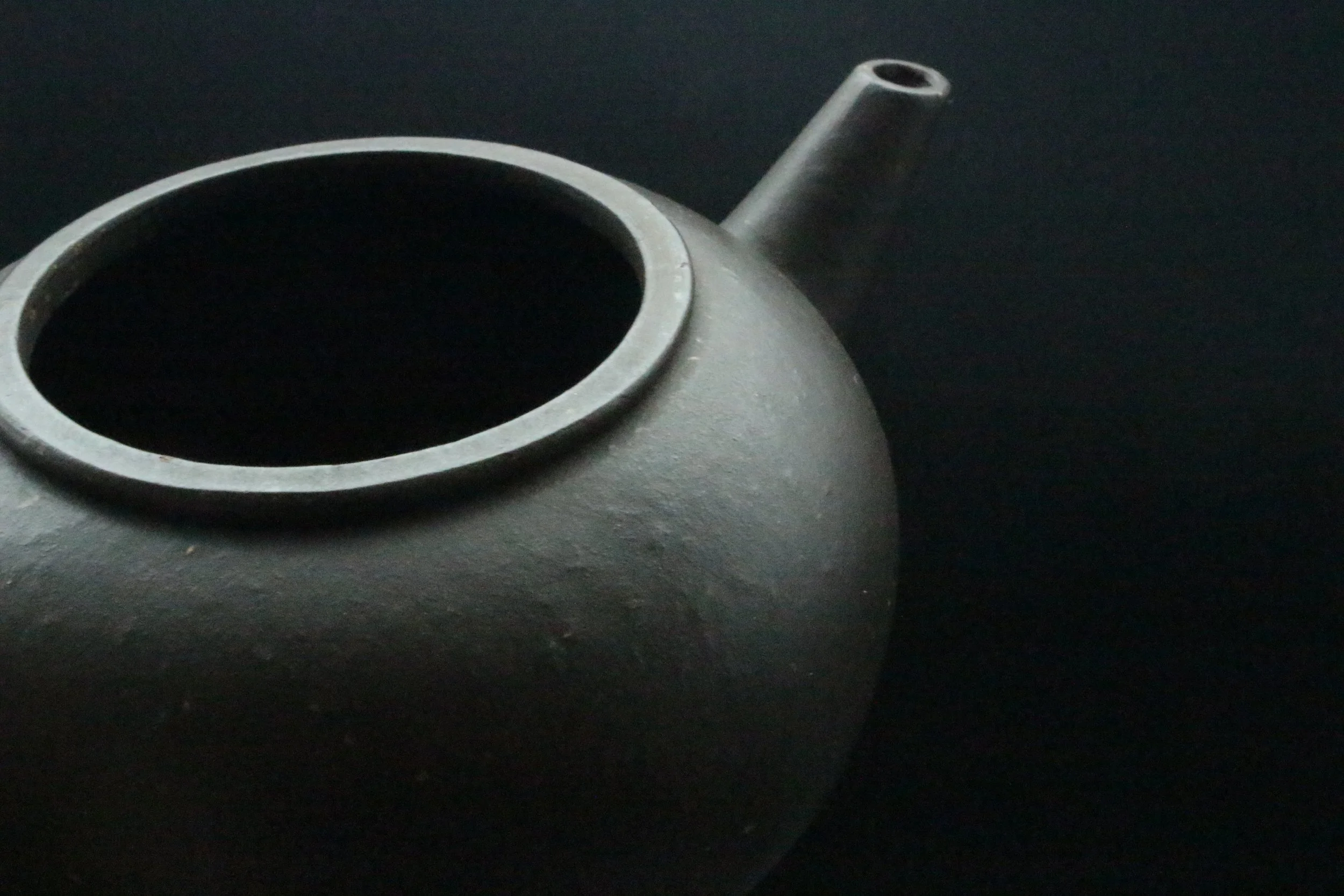
Yi Xing F1 , Taken By- Bobby Wang
This image is subjected to copyright
During our afternoon tea session, a discussion about the word 陶瓷(Tao Ci) referring to Ceramic came up… and boy oh boy we had a long conversation. Anyway, I summed up some “brief” details about Ceramic/Pottery and why they are “still” so difficult to define for us. So here it goes.
Note: feel free to drop a comment because I am curious about how different cultures/countries categorize these items and why?
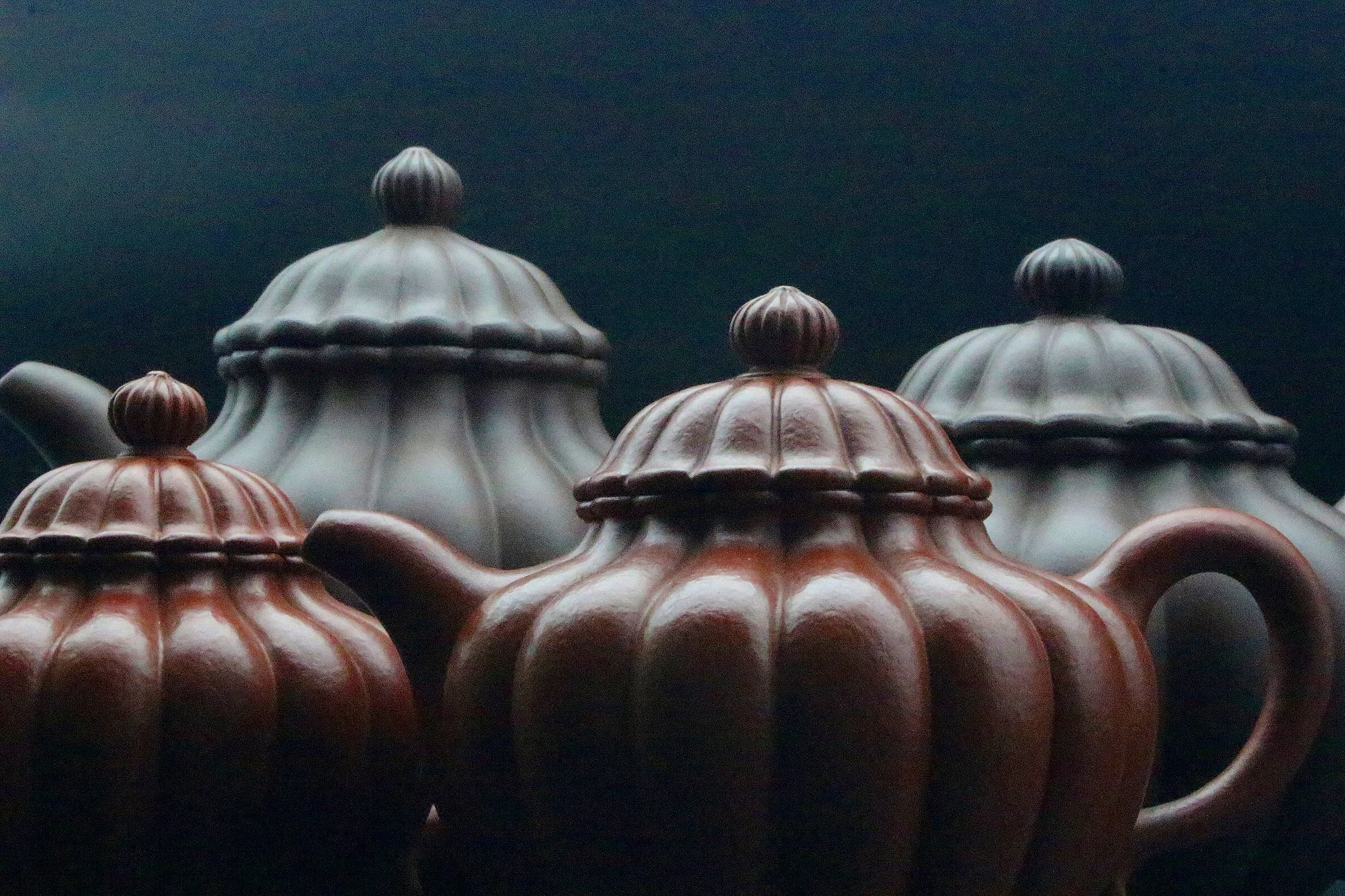
1990 Medium Chrysanthemum Zhu Ni / Purple Sand, Taken By- Bobby Wang
This image is subjected to copyright
Imo, ceramic and pottery are often considered to be the same based on western terminologies. However, I thought that it would be good to categorize them separately if it is possible. Let me emphasize this again, they are referred to as the same thing in general but they “could” be separated or you can say I am trying to separate them in a way. I think it all depends on what perspective you are looking at it from. For instance, they can be differentiated from elements such as language, raw material, firing temperature, glazing etc.. But for the sake of this discussion, let us approach this In a simpler way.
From my pov, both Pottery and Ceramic describe objects made from clay through the firing process, and the word ceramic was, too, a derivation of the word “of pottery” from Greek. In addition, the Chinese refer to Ceramic as “陶瓷”(Tao Ci) in which the word Tao (陶) refers to pottery/earthenware whereas CI (瓷) refers to porcelain. So porcelain is indeed included in the ceramic family if we look at it from this pov. (I'll emphasize more on the two character in the later part of this discussion)
Earthenware, stoneware and porcelain are three of the most common types of pottery / ceramic we see on the market nowadays. The making process of Earthenware (陶器) is done with relatively low firing temperature ranging between 800-1100 °C, resulting in brittle but hard material that is porous. Ex.Majolica
Stoneware (炻器) are usually done at a higher firing temperature that is above 1200 °C and can be made from multiple type of clay for coloring purposes. The high temperature caused the product to go through a process of vitrification. Like it’s name, the durability of stoneware are in general better and are denser. Waterproof is also another trait from stoneware so most of them do not need to be glazed. Ex.Yi Xing Teapot
Lastly, porcelain (瓷器) products aka China are made from refined clay aka porcelain clay / kaolin clay / soft white clay and are often fire at 1200-1400°C resulting in a denser non porous semi translucent texture when are made extremely thin. Ex.China vast
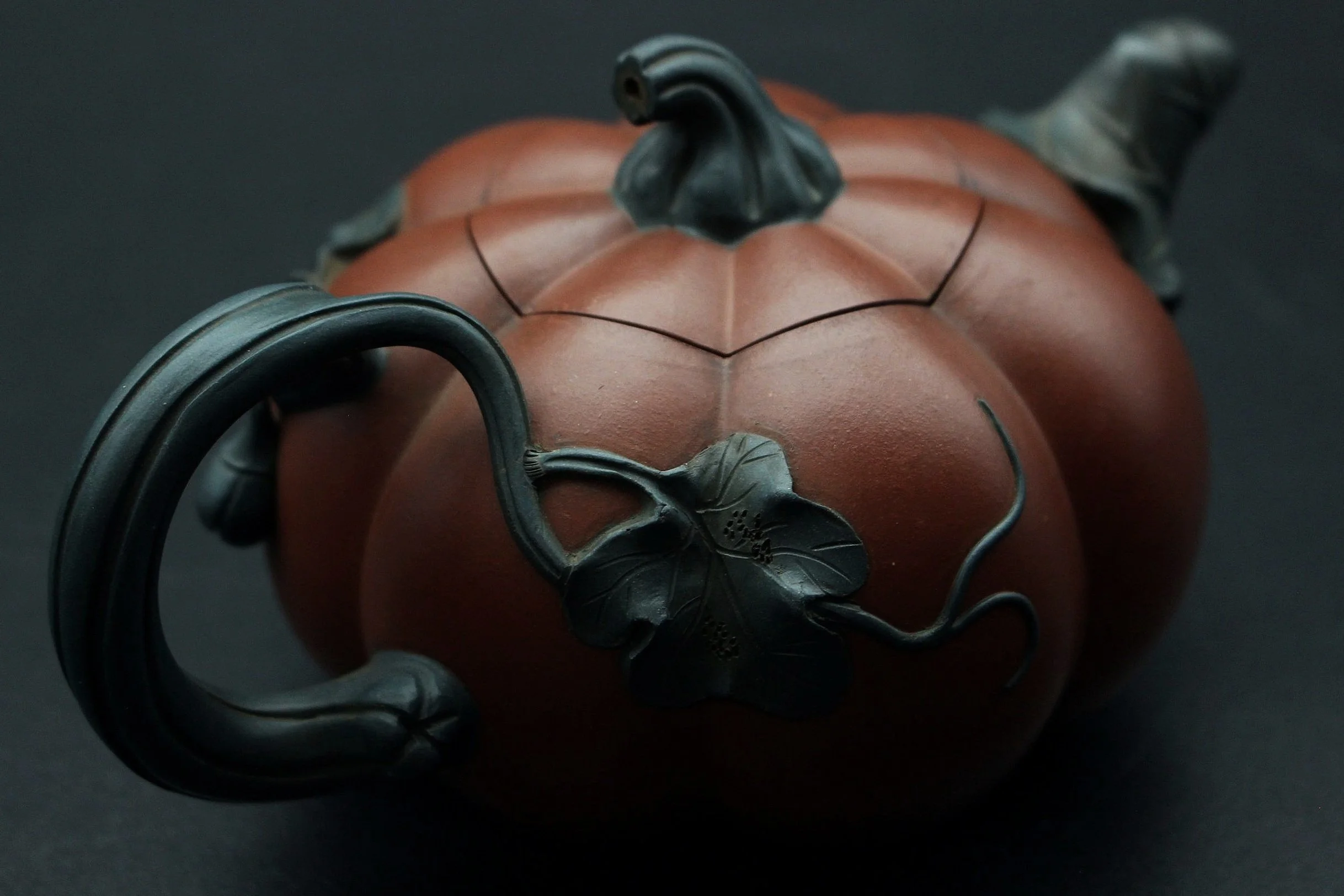
Pumpkin Vine, Taken By Bobby Wang
This image is subjected to copyright
Now, after the basic introduction of Pottery / Ceramic, we can look into the reasons why these terms are extremely confusing for a lot of reasons (even within the Chinese community). As we mentioned earlier, the Chinese refer to Ceramic as “陶瓷” in which the word Tao (陶) refers to pottery / earthenware whereas Ci (瓷) refers to porcelain. However, when both (陶) and (瓷) are combined as “陶瓷”, it is translated as ceramic products in general. In the Chinese terminology, Ceramics contain solely two types of products which are either Pottery / earthenware (陶) or Porcelain(瓷). At this point, you might be thinking, so ceramic and pottery…are different? Like I mentioned above, from the Chinese terminology, pottery/earthenware(陶) is actually categorized as the first part of the word for ceramic “陶瓷” whereas porcelain(瓷) takes up the role of the second word. So in another way, you could say ceramic is a general term that include both pottery and porcelain products in this context. Which we could then further conclude that a Yi Xing teapot is considered as pottery within the ceramic world.
However, you might be wondering at this point, well, what the hell happened with stoneware? My teapot is categorized as Stoneware ceramic artwork in the western terminology, but what will it be considered in Chinese though?
This is the part where 炻器(Shi Qi), aka. Stoneware is introduced. Terminology of Stoneware was not recorded within Chinese history until the Europeans adopted it. Like the word Stone 石(Shi), the Japanese later then added the word fire, 火(Huo) into the word stone 石(Shi), giving us the word 炻(Shi) . (Yes, they both read and pronounce the same).
This is to have people better understand that stoneware are not made out of stone but clay with fire that produce a stone-like quality. However, stoneware was actually found in the Chinese Canonical Text as 石胎瓷 (Shi Tai Ci), translated as “Stone based porcelain”. Thus, I believe that “Stone based porcelain” was simply a terminology that was not widely accepted back in the days as it is situated in between Pottery/Earthenware and Porcelain AND was only later accepted as “stoneware” after such terminology was widely adopted by the European and the Japanese.
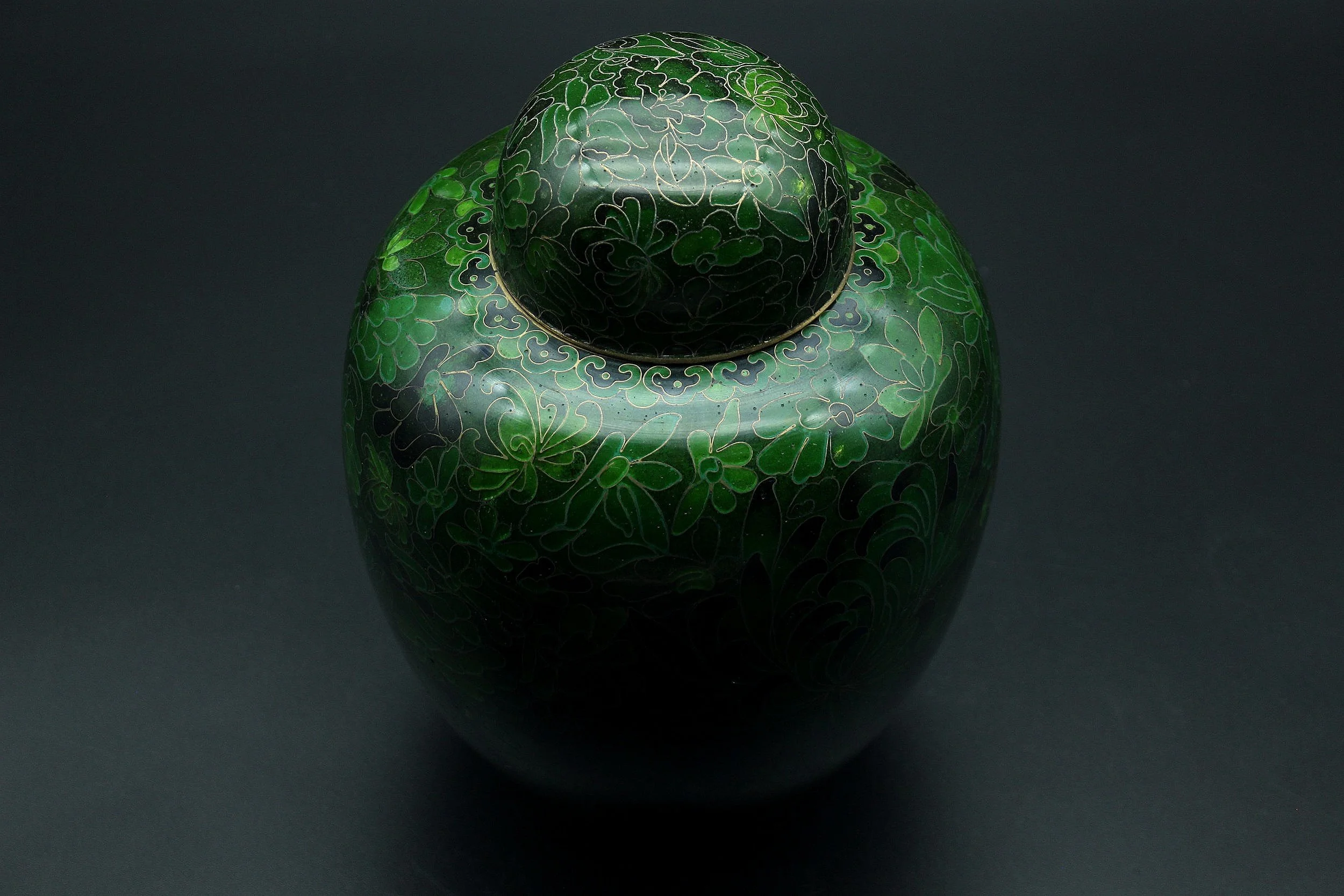
Cloisonné Urn, Taken By- Bobby Wang
This image is subjected to copyright
SO, back to our question once again, if stoneware is not a popular term that is adopted in Chinese culture, what will purple sand teapots be considered as? Well, I would say purple sand teapots are still mostly recognized as Pottery Ware 陶器(Tao Qi) in the culture based on the chinese character . However, with the improvements of technology in the making process, the terminology of what Yi Xing teapots are categorized as seems to be shifting as time procced. However, that will not be the main focus on today’s discussion. Maybe we will dedicate another article that digs deeper into this in the future.
What’s your thought on this? Feel free to drop a comment on Instagram ! Appreciate your time and hope you enjoyed this article.
Bobby