Preface
Dear friends, before we begin the discussion today. I would like to thank you first for clicking that button and visit our page. I strongly encourage to join us on Instagram where we are most active and build a life long connection with us as this goes way beyond than just a business. Again, thank you for taking the time to read this. Now shall we?
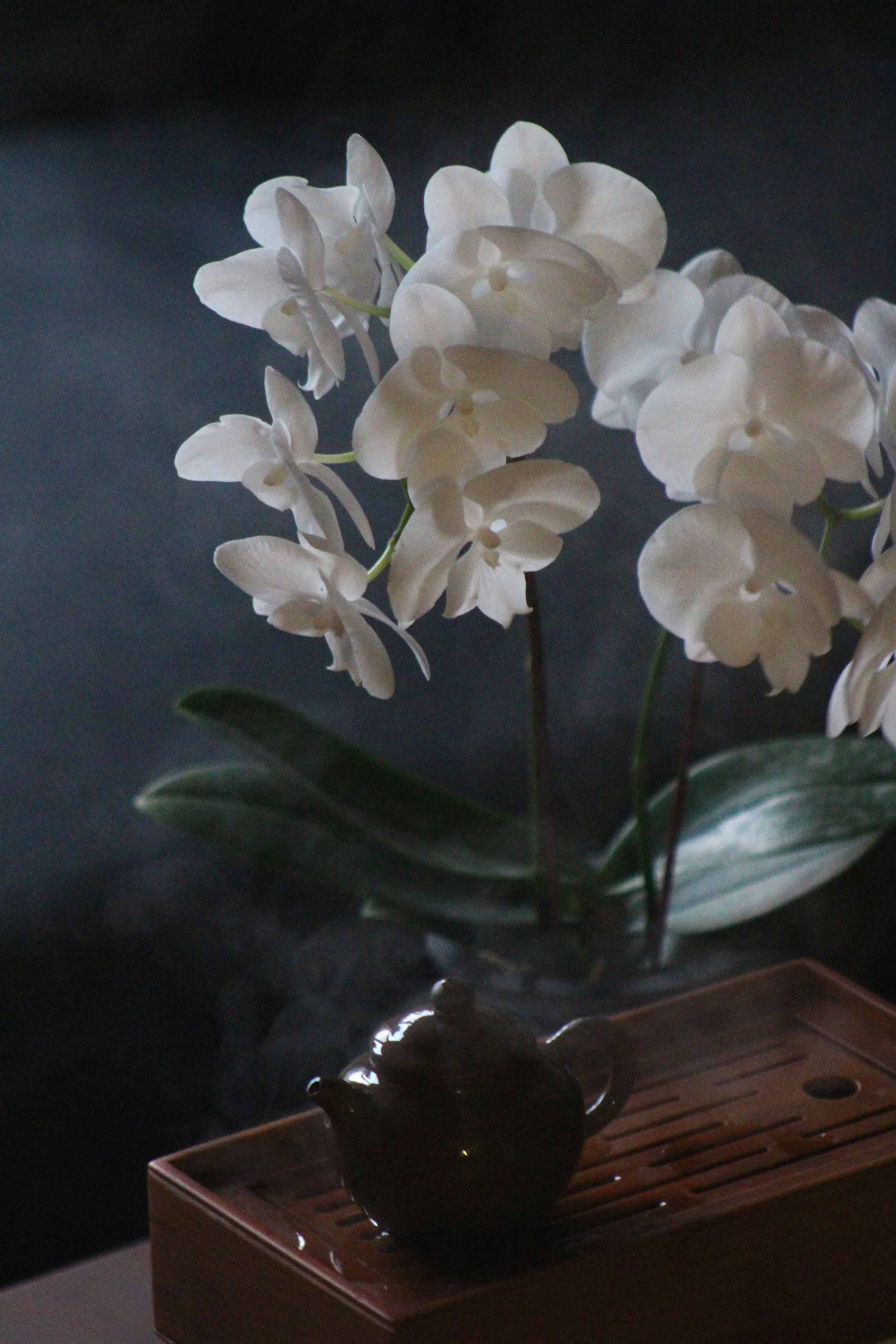
This image is subjected to copyright
When it comes to Yi Xing stoneware, I often examine the reason behind my purchase. Even though I have the luxury to obtain stoneware with ease from the family, I still find myself having the urge to browse and purchase stoneware from collectors and auction houses. I guess the question that I am trying to raise is, have you ever thought about the reason behind your purchase when it comes to Yi Xing stoneware ?
Take some of our collection as an example. If I were to be purchasing a teapot that was made before 1984-1985, what would be the reason behind it? Would it be the clay since it couldn’t be found elsewhere nowadays? Or maybe the touch-up traces that you could find on some of the older works? Or maybe the stamp that proves a certain trademark back in the days? I could really go on and on…
However, I think a lot of people would simply say, well, I want a teapot that is made with a very good clay and it has to be fully handmade. Yet, the knowledge required behind such request is in fact a never ending learning process. In today’s article, we will be discussing some of the common questions that I personally faced when I first came in touch with Yi Xing stoneware. Before we start, I need to clarify that I am not setting a standard as I believe standards are merely a consensus reached by the majority. What I wish herein this article is to first, provide a point of view and hope to serve as a tool that might come in handy when you are approaching Yi Xing stoneware and second, to display how my thought process look like when I approach a teapot.
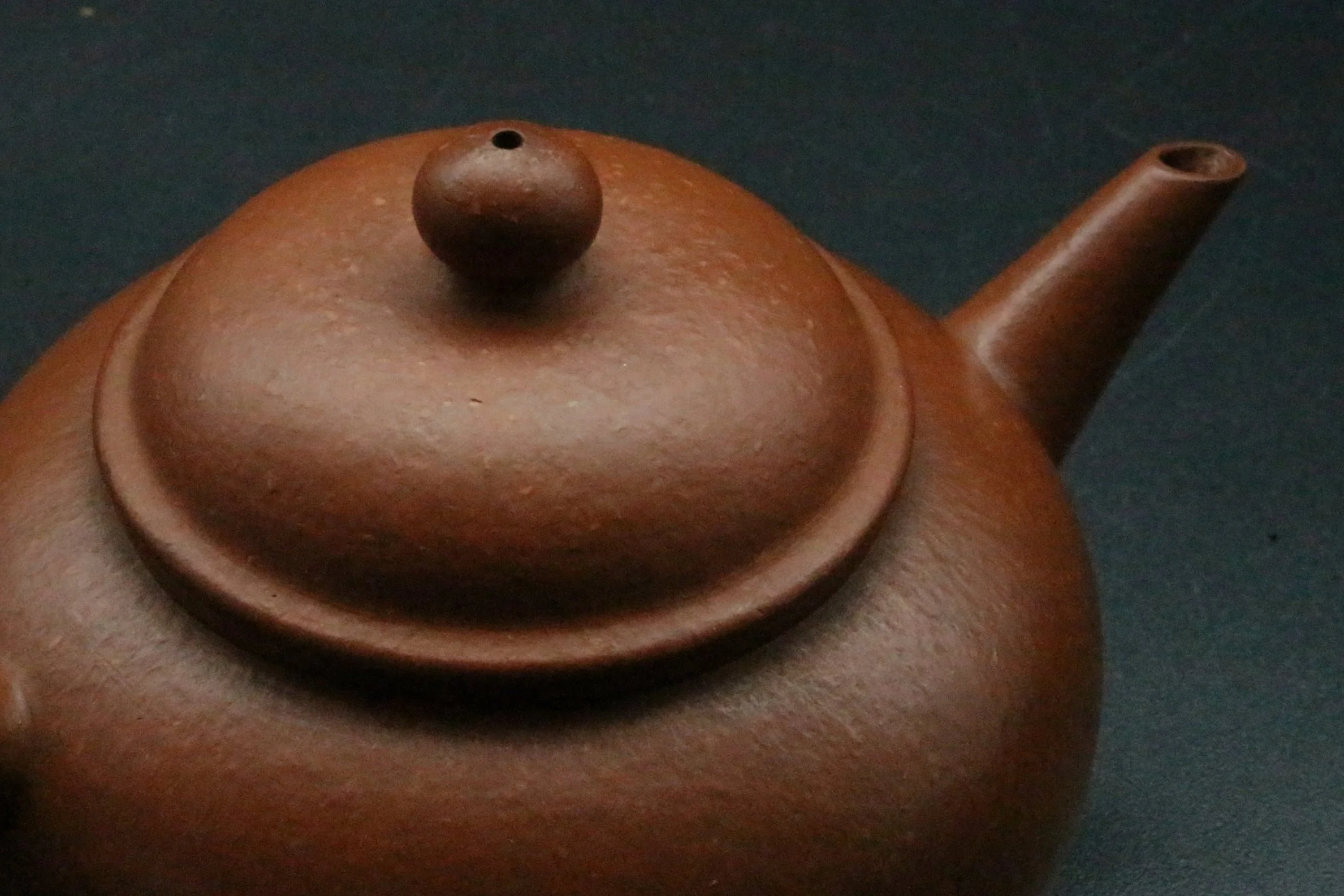
So let's cut straight to the point.
Handmade vs machine-made was one of the things that really confused me back then. To dig deep into this, we first need to examine the definition behind handmade. How would you define handmade teapots? I know some of you guys would say, well ,teapots that are made using the standard tools will be considered handmade which I agree. However, what if I tell you that a set of molding tools is very often involved in the handmade teapot process? Similar to the tools craftsmen use to clean up, patch, decorate. Based on your standpoint, would you considered it as simply “tools” ?
At this point, some of yall might say, that’s semi handmade then? The answer is yes and no depending on how you define fully handmade. Take Master Gu Jingzhou’s work as an example, his work is obviously 100% fully handmade without any molding tools involved, which is also the reason why his work comes at a great price. Or should I say a price that most of us would never be able to afford.
What I’m trying to say is, little did I know back then, a portion of teapots found in the market are actually semi handmade. Don’t get me wrong though, there are still plenty of handmade teapots out there in the market, but we need to understand that even teapots that are semi-handmade are still considered as handmade products in the market. Why? From a production standpoint, prior to applying a molding tool, the clay would first need to take a basic shape. Meaning, before the mold was applied, the clay had already taken up 80% of the shape via the traditional handmade shaping method. The remaining 20% are then “touched up” via the tool. Hence, understanding that sometimes, a semi-handmade teapot does not take away any value of the work was one of the big lessons for me. I had to really touch up on the history, clay, craftsmanship and many other aspects of the work and culture to then, truly appreciate and understand what I am holding. Not to mention that a good semi-handmade teapot is in fact, hard to achieve at times.
However, if what you are looking for is a 100% handmade teapot, there are some tips of you. BUT, this is not an absolute. I’m only using examples that are obvious enough. Meaning, if you see what I see in the following tips, you could pretty much assume that molding tools are involved in the making process which then, you could consider the teapot as a semi-handmade product. Note that in the following examples, we are solely focusing on the obvious tips to spot handmade vs. semi handmade. We will not be focusing on clay and other crafts related details today.
I will be breaking down what I see step by step in order to understand why these items are considered to be of lower quality and less desirable for me.
Below are 2 types of semi handmade process involved different tools. in (a.) a molding tool is used first, then the craftsmen will continue using hand tools to finish the detail touch up. Which in most of the cases, these are still considered to be handmade but less desirable for consumer who are looking for specifically 100% handmade items.
However, in (b.) less touch-up is needed since the inner wall of the teapot has already been pressed and shaped using a machine arm that has a spherical structure attached to it. When the machine is operating, the sphere will rotate and press against the inner side of the mold in order for the body to take shape efficiently. (very often seen in cheap mass produced teapots). In another word, this process pretty much taken most of the work away. Which is also another reason why collectors tend to avoid such products known as the 機車壺(Ji Che Hu).
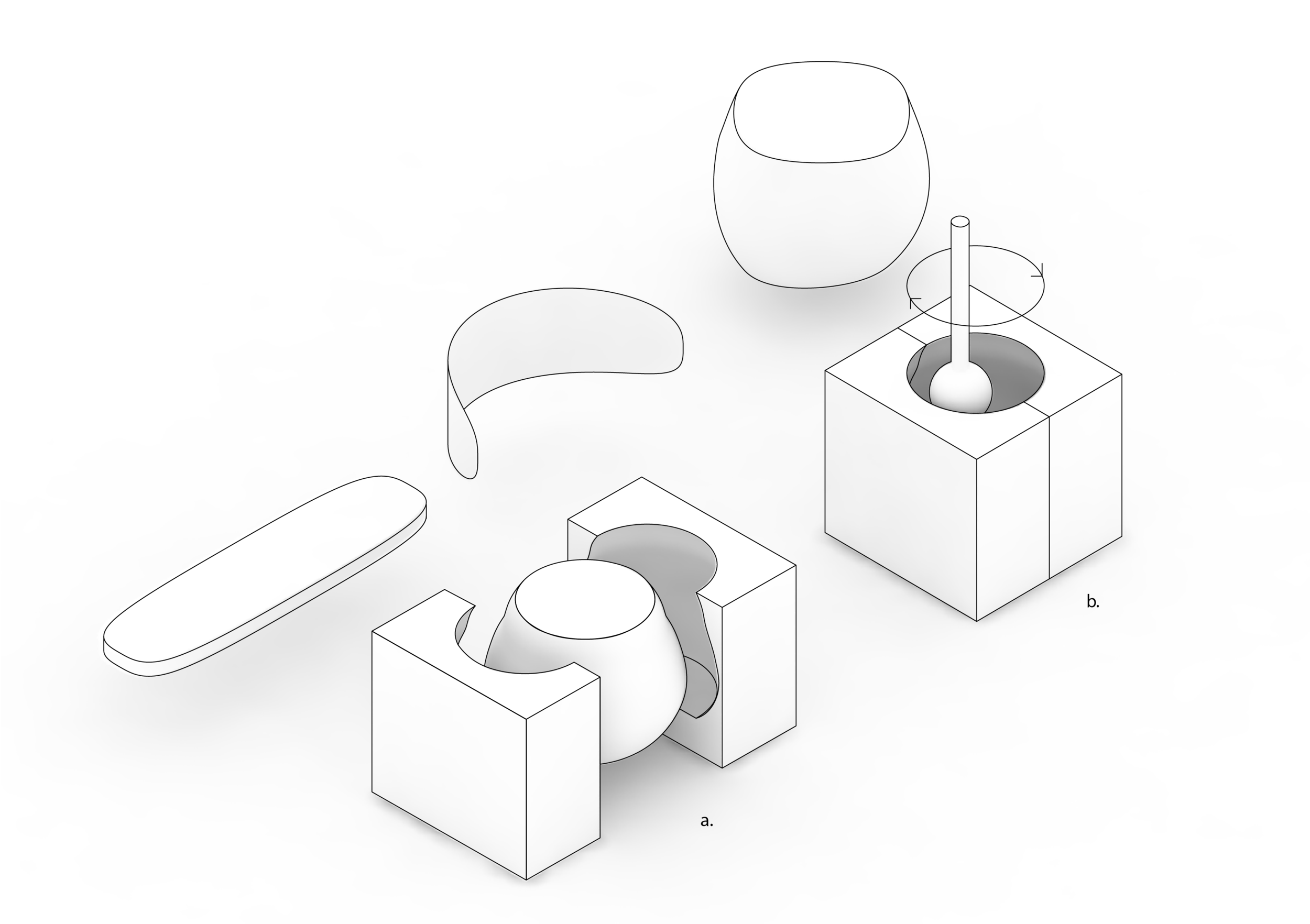
Note that these are different from Slip casting(which is something you really want to avoid). In another word, a big portion of handmade process is still required using these method. For slip casting, we will discuss in our future articles if you guys are interested.
Disclaimer: Once again, I will only provide a brief and simple explanation on some of the things that I spotted to keep things simpler. We will not be analyzing the clay, how different types of teapot are made using different handmade methods. These will slowly be covered in the future. (Lets try to keep things easy and short!)
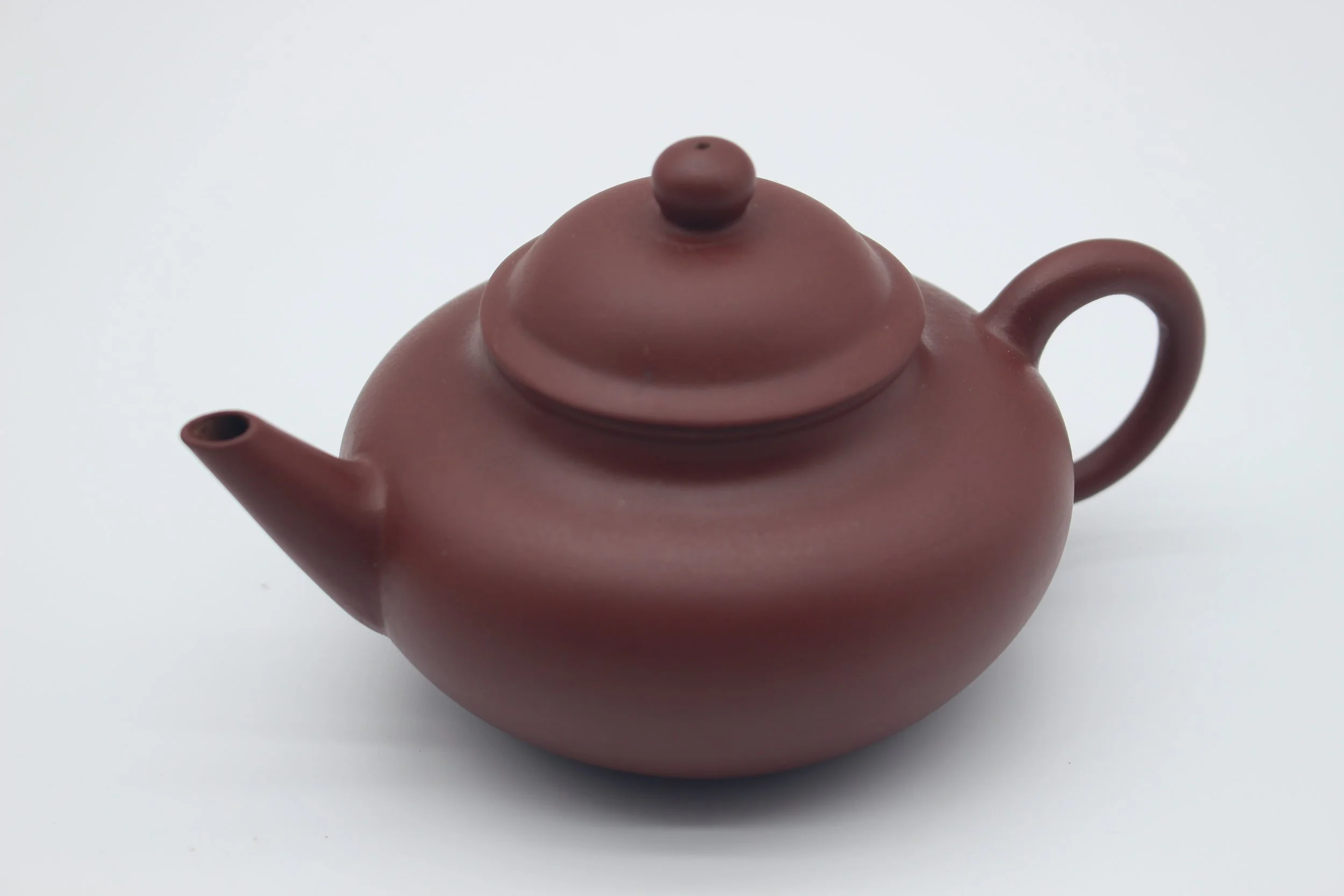
To demonstrate the following tips, Out of 5 of the teapots below, 4 teapots are purchased from the local auction houses. Each of them is sitting at around 80-90 USD (based on last bid). Now some of the sellers claimed this to be a fully handmade product and some simply stated that the product is of “Early YiXing Teaware”. Note that there are no stamps on the bottom of these teapots cause I removed them in order to protect the sellers’ privacy. 2 out of 4 teapots were the returned eventually because I was dissatisfied with both the “craft” and the “material” not because I found out that it wasn’t fully handmade. (I am well aware of what I am getting at this price)
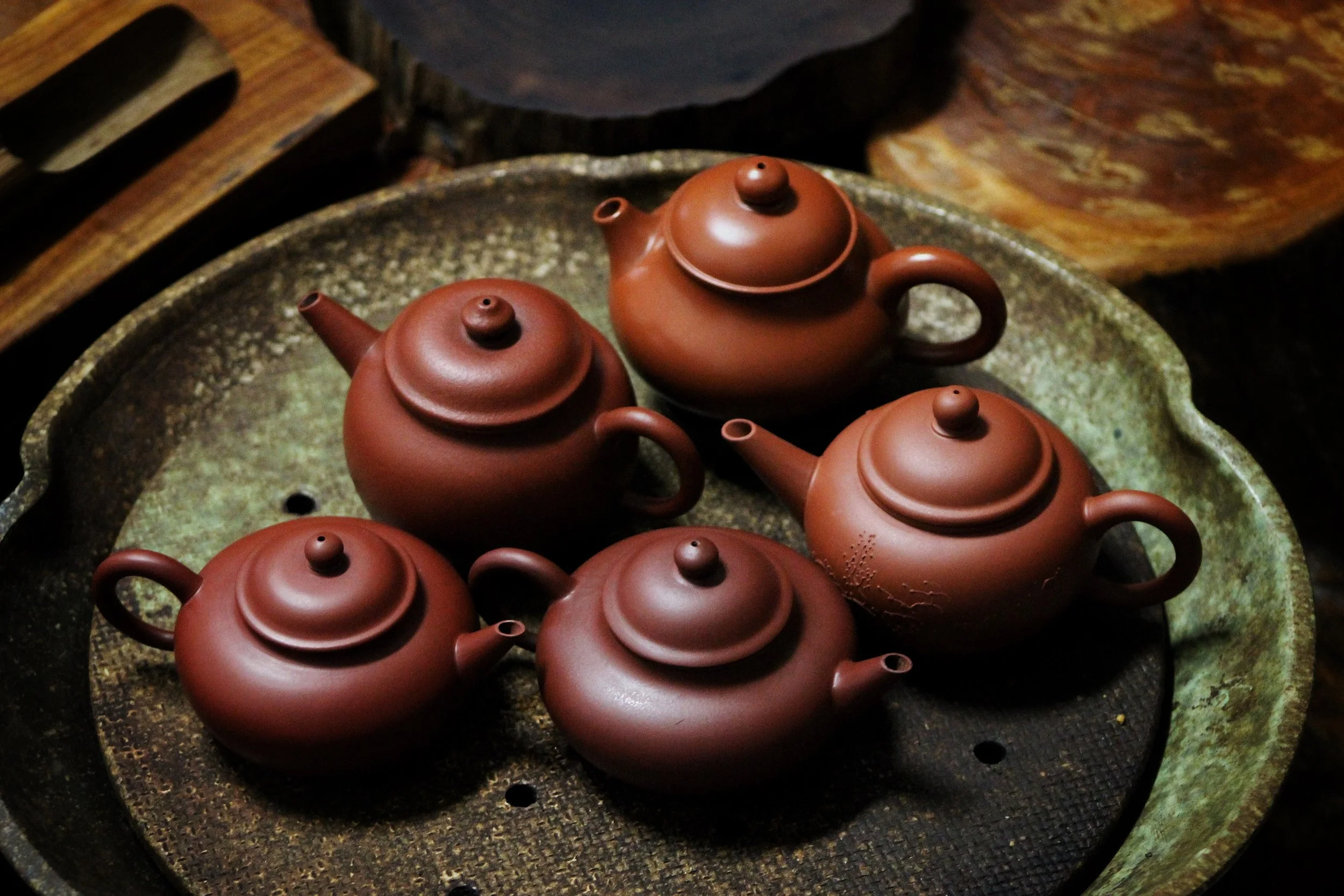
Don’t all of them look gorgeous?
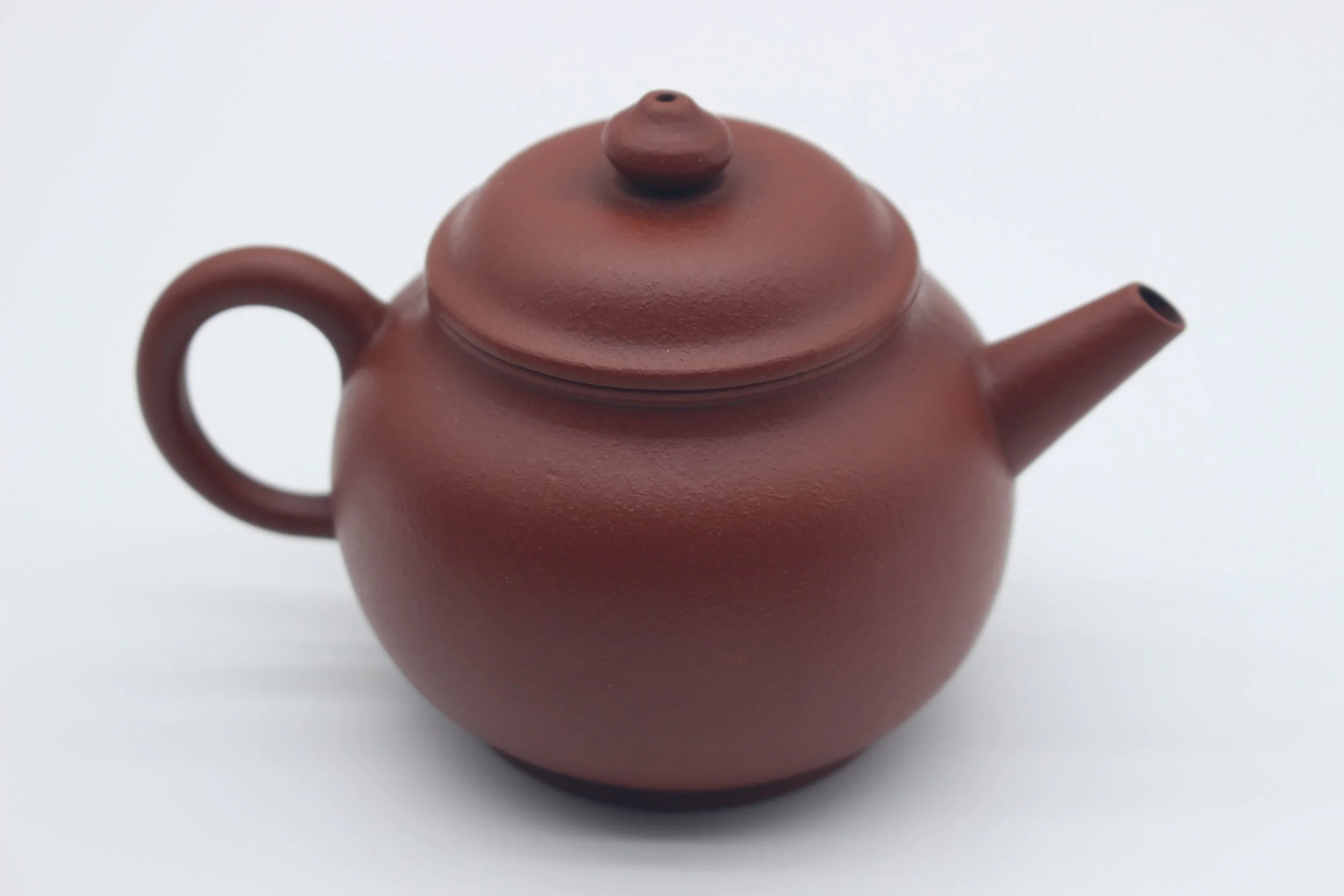
From the first glance under the light, the material has already failed my expectation, however, material is not what we are focusing on today. So let’s assume it passed and we can now continue to explore other details.
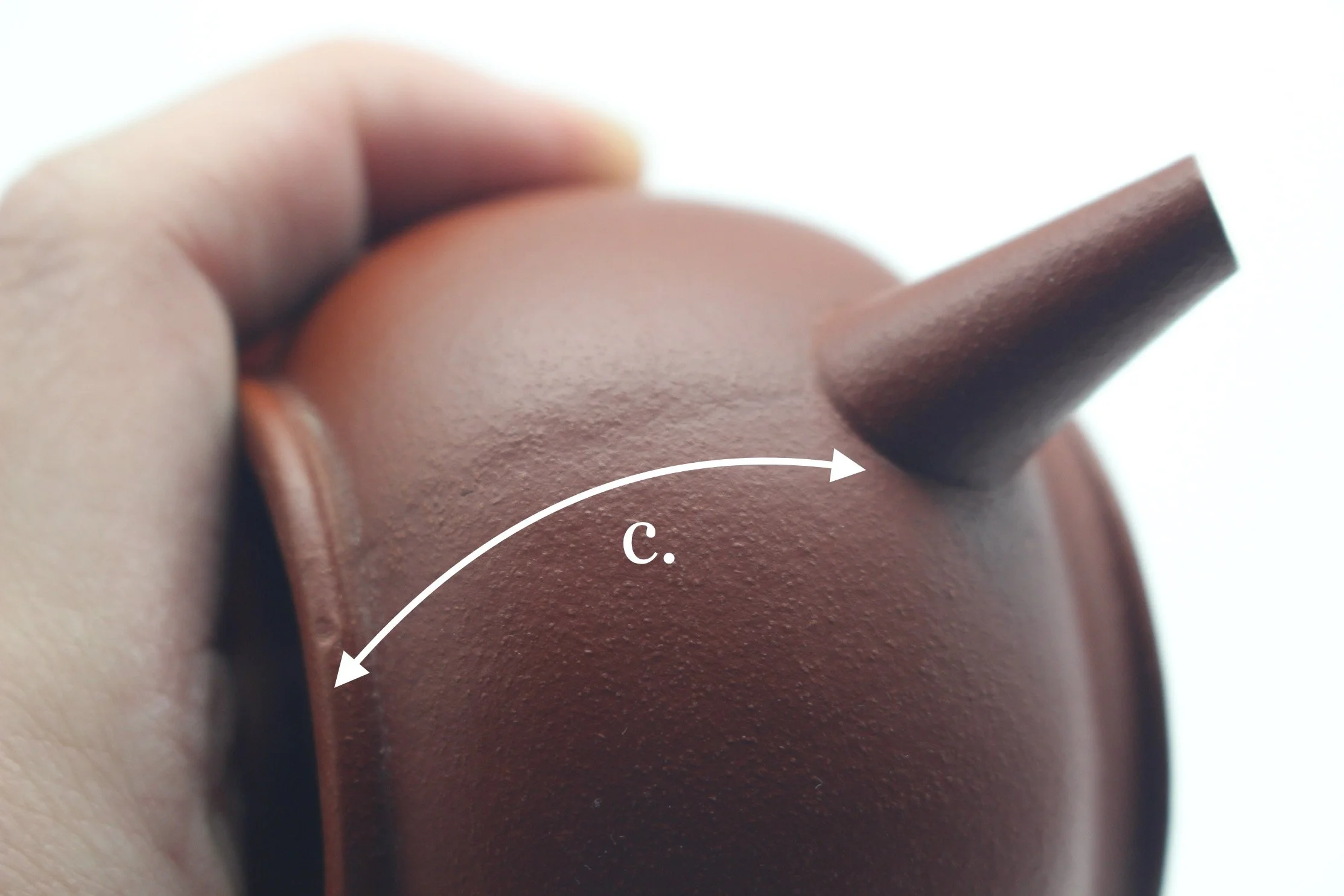
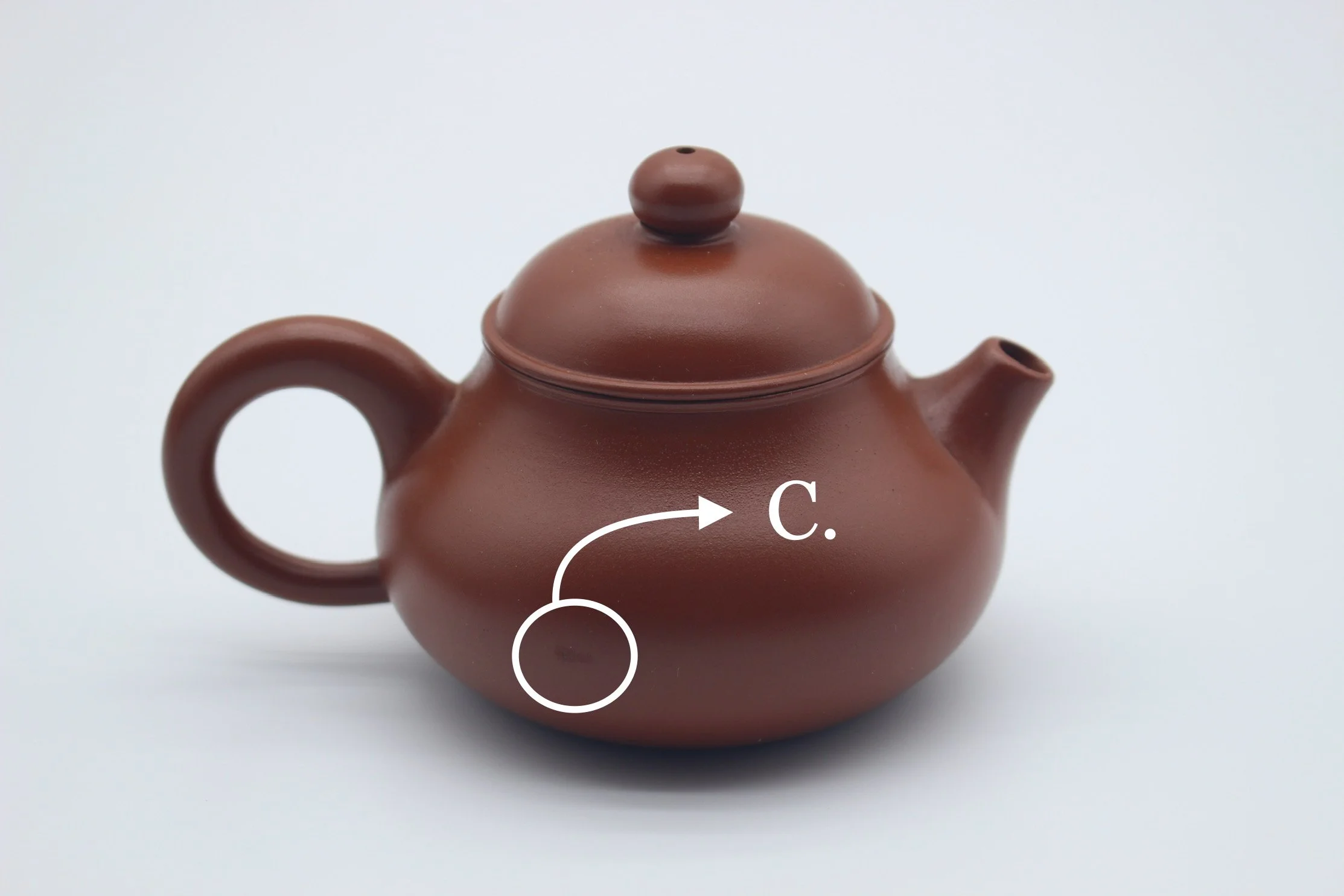
C.
This is what we are focusing on today. Molding tool marks, often referred to as the A/B line or the Half line.
Important: teapots that involve molding tools are often shown with A/B line BUT good craftsmanship would cover it up perfectly. AGAIN Having an A/B line does not take away the value of a teapot in my opinion (depends on why you are buying this piece of work) but a 100% handmade teapot with good touch up craft shouldn’t have an AB line, at most, you will only see B line at the handle region. Meaning, seeing one line at the handle area is normal for handmade work (but less desirable of course cause you are expecting a good touch up) , but seeing TWO , you might then need to bear in mind that a mold most likely had taken place during the production process.
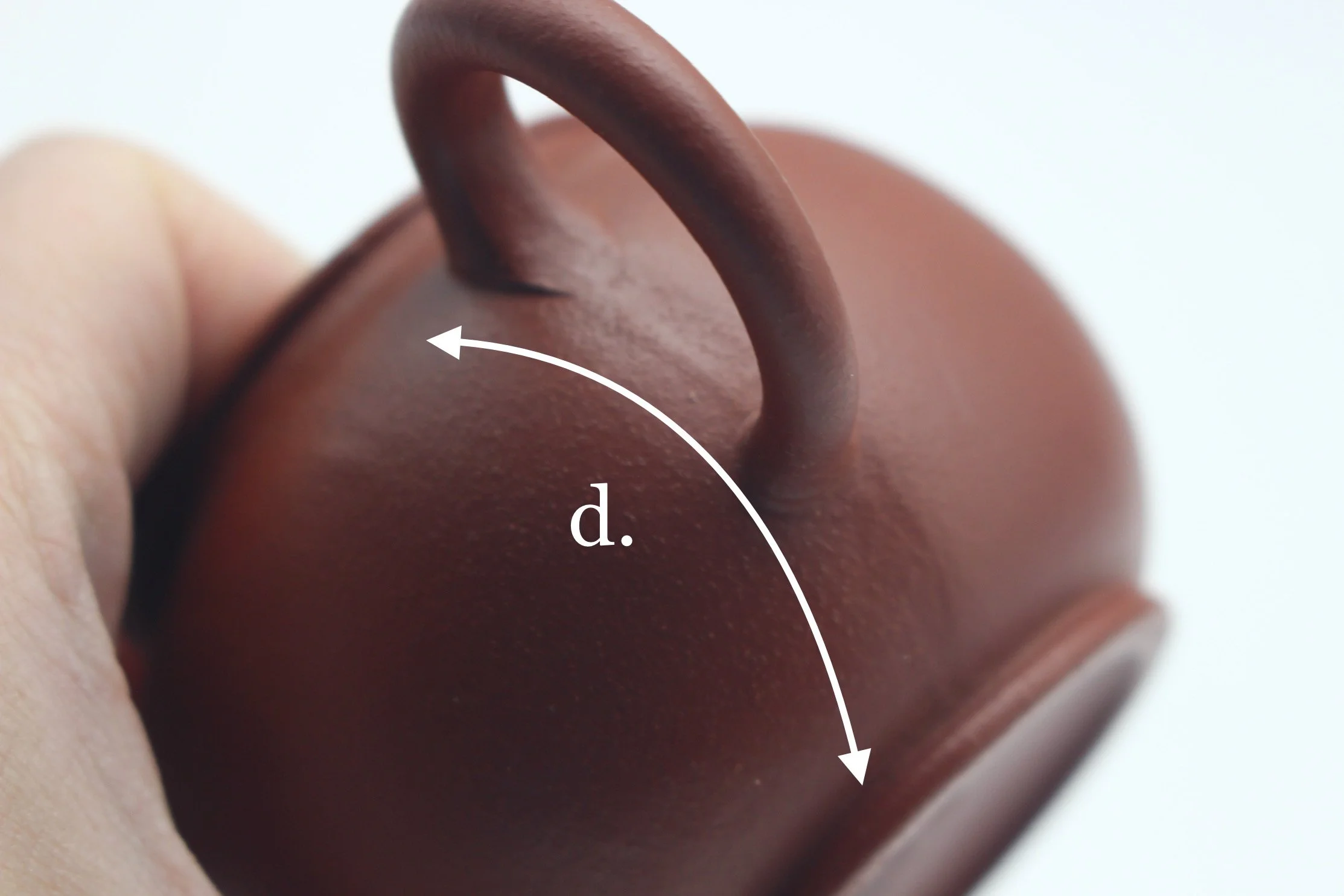
d.
Like I mentioned above, seeing a half-line mark at the handle is quite normal for some of the handmade teapots, but if you see one at the spout area upon receiving a 100% handmade teapot, you should check if there’s one at the handle area and most likely you will find one. (Ill show this in the next couple examples)
Let’s look into other details of this teapot. When an A/B line is found either through looking at it or touching it, I would then look at the “touch up” of the line. Meaning this is when I once again examine the craft of the maker. Herein you could see the lack of attention and care being put into this work, leaving a low key ugly trace on the body. Thus, this has already completely failed my threshold at this point. With this sort of touch up , the maker seems to be in a rush meaning mass production could also be a reason why molding tools took place. (I often fact check these possibilities and see if my concerns and assumptions lined up)
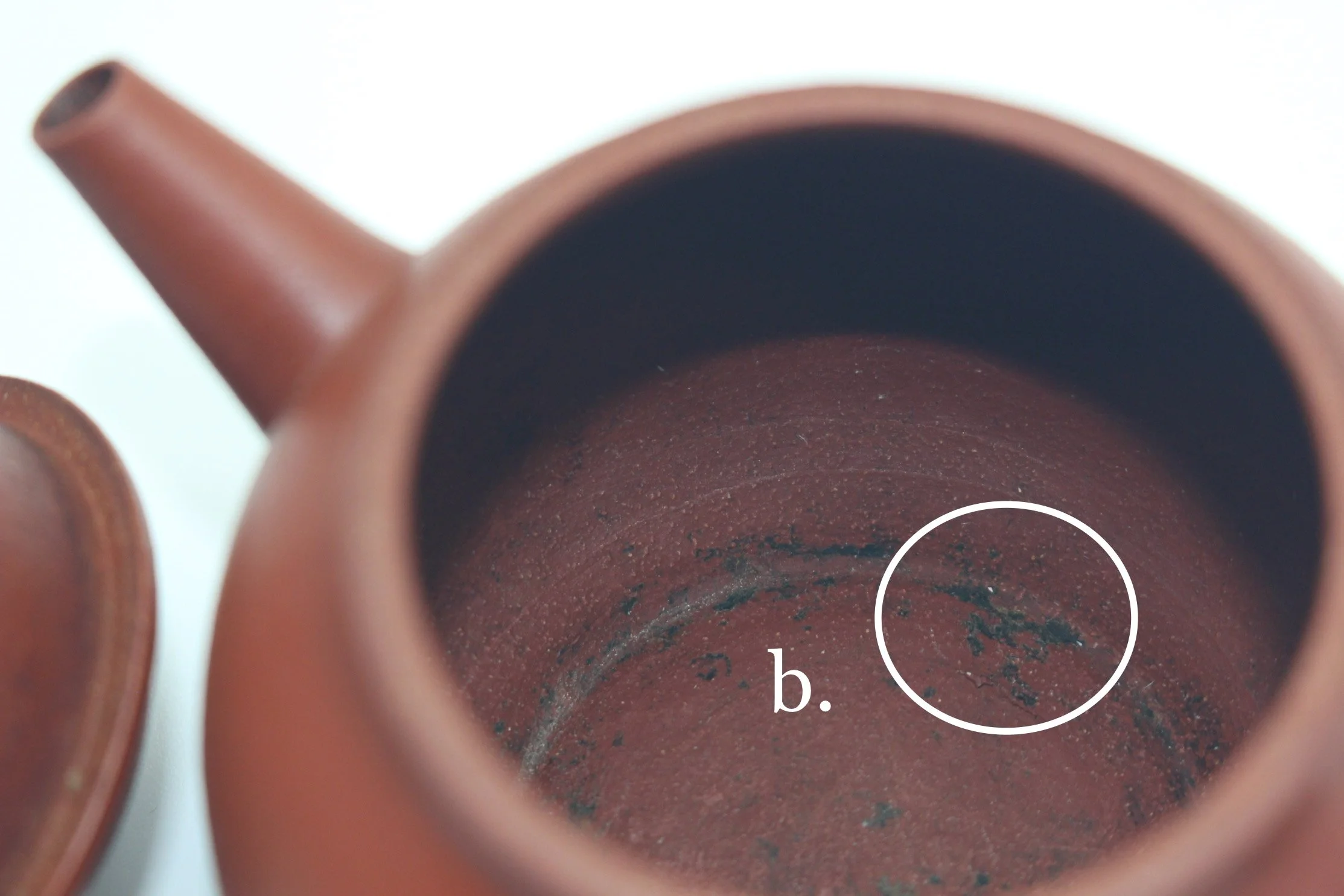
b.
Quick note on (b.) though this sounds ridiculous, some of the really terrible sellers often tried to create a false impression of the usage of a teapot and sometimes, you might get things like this that is “most likely” not a result from tea brewing. (I did not even bother to scrape this off and check what it actually is)
If we were to look into the inner wall of the teapot, tool marks seemed to also be left at the inner part of the wall which is normal (there’s a lot to be covered about inner wall’s detail but for now I would say, Inner wall’s detail could be faked easily). Last but not least, a quick reminder, the reason why the A/B line is pointed out as standard is because it is more reliable in my opinion. Most of the other details ranging from inner wall to exterior surface could be fake if the craftsmen is determined and experienced enough. However, when you see both A/B lines, your best bet is that it is semi-handmade.
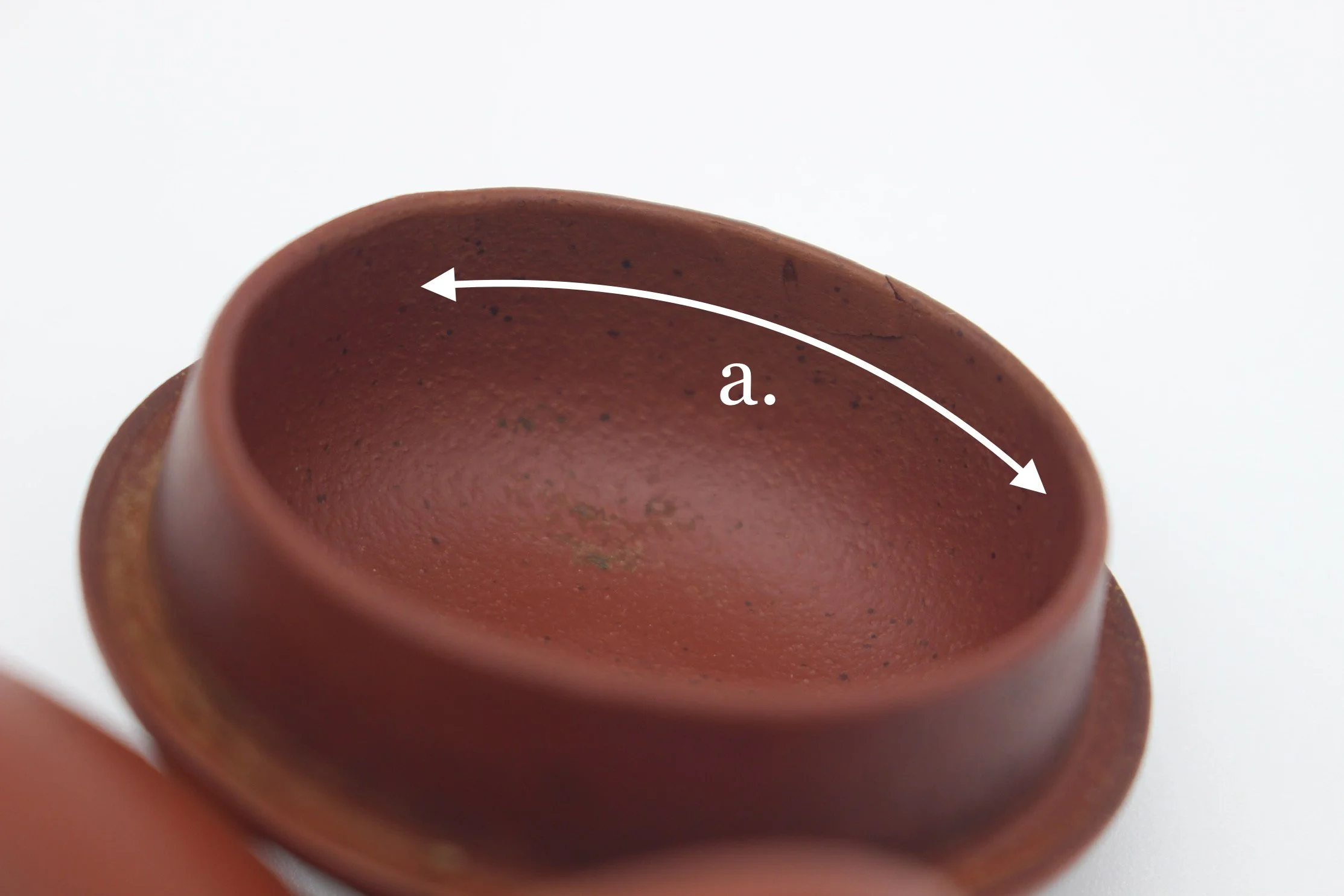
At this point, I’m thinking about how I should return this item. So, I continued to examine the other part of the teapots and luckily, I found a trace of touch up marks at the inner lid of the hat, showing that this hat was damaged before. And…that’s how I managed to return this teapot. Damaged lid that is not included in the description of the product is basically a no question refund and return.
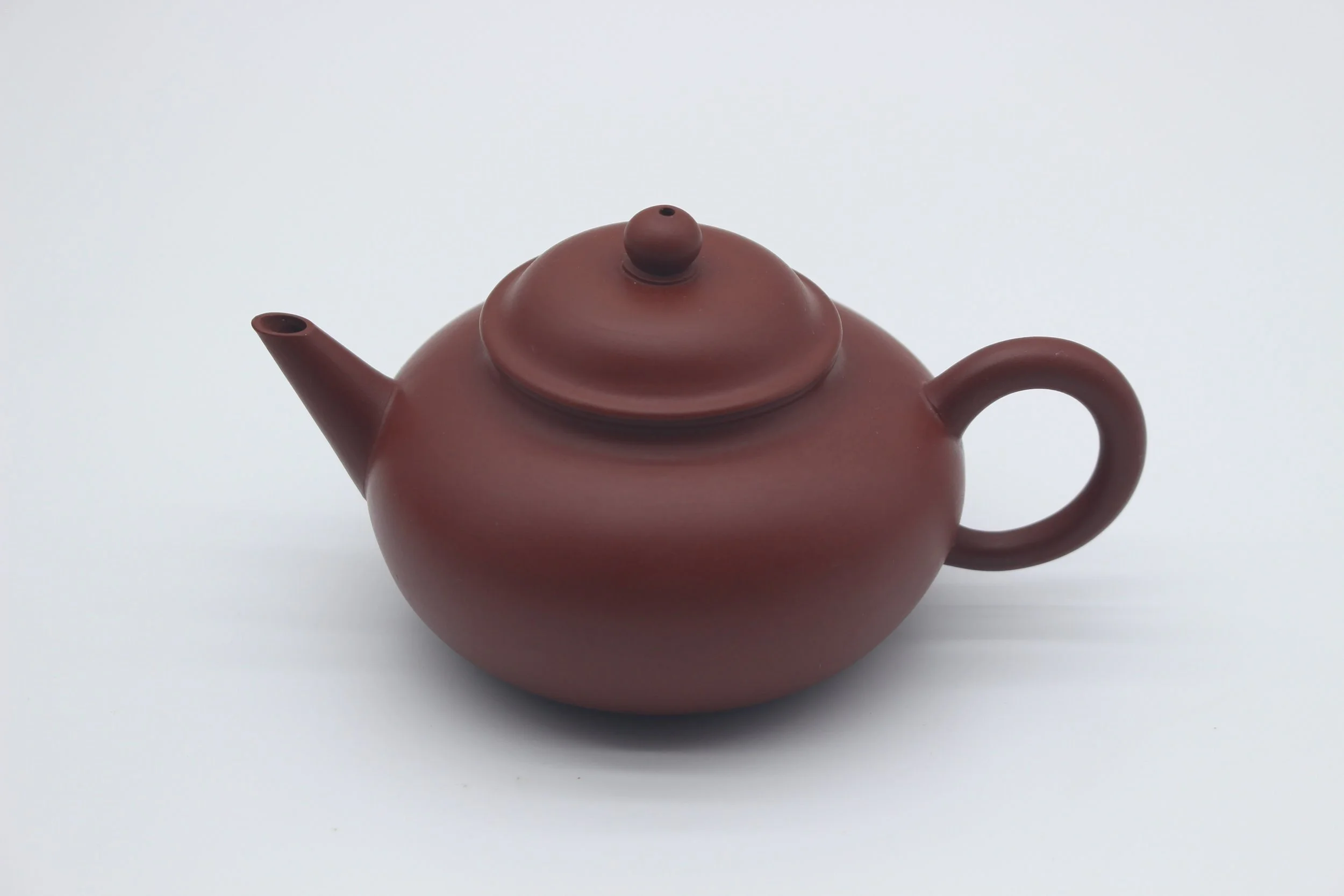
Now let’s take a look at some of the other examples. Again, the clay had failed my threshold on the firs sight. For more details about clay and other craft related topics, I’ll slowly cover them in the future.
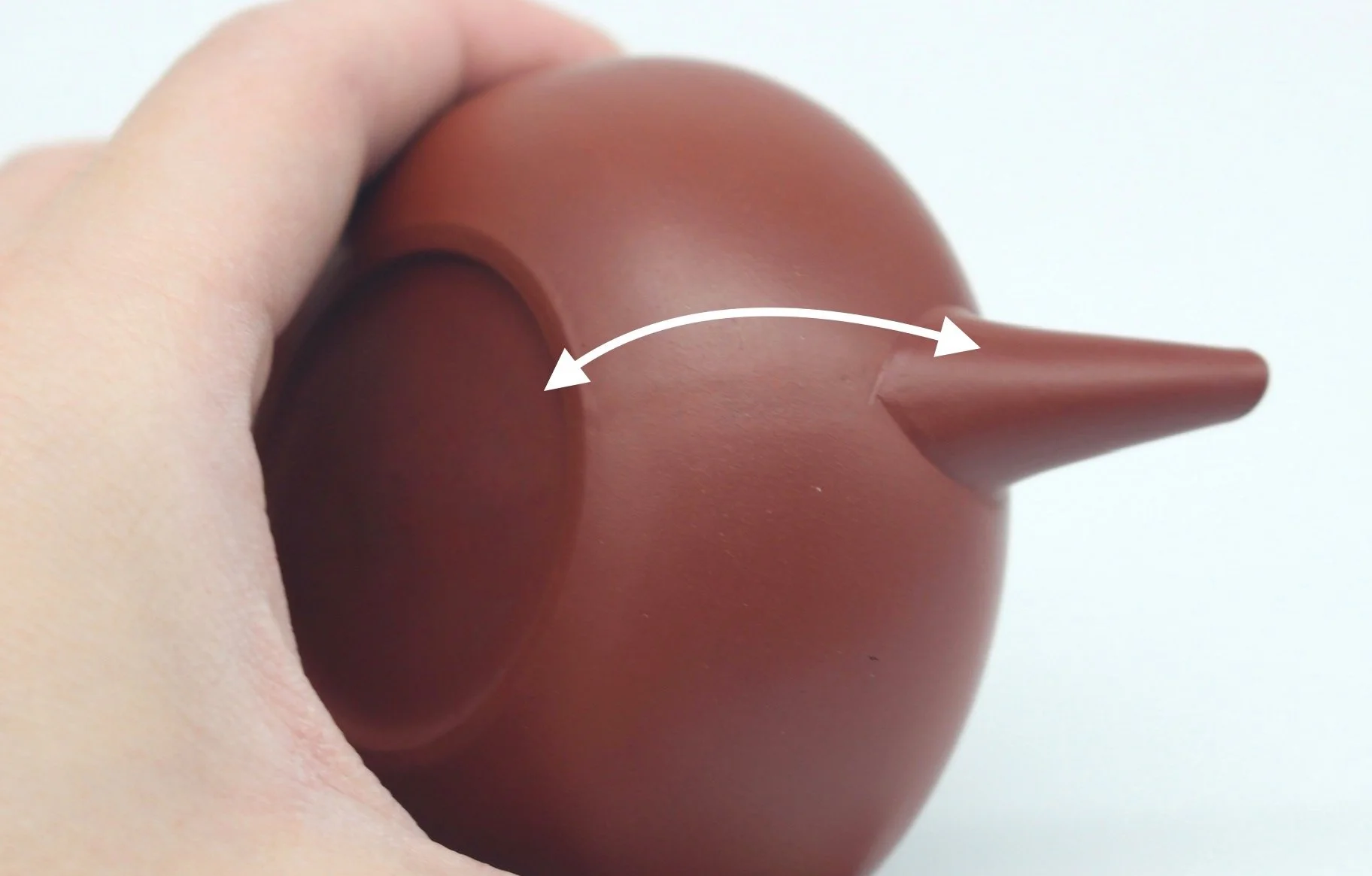
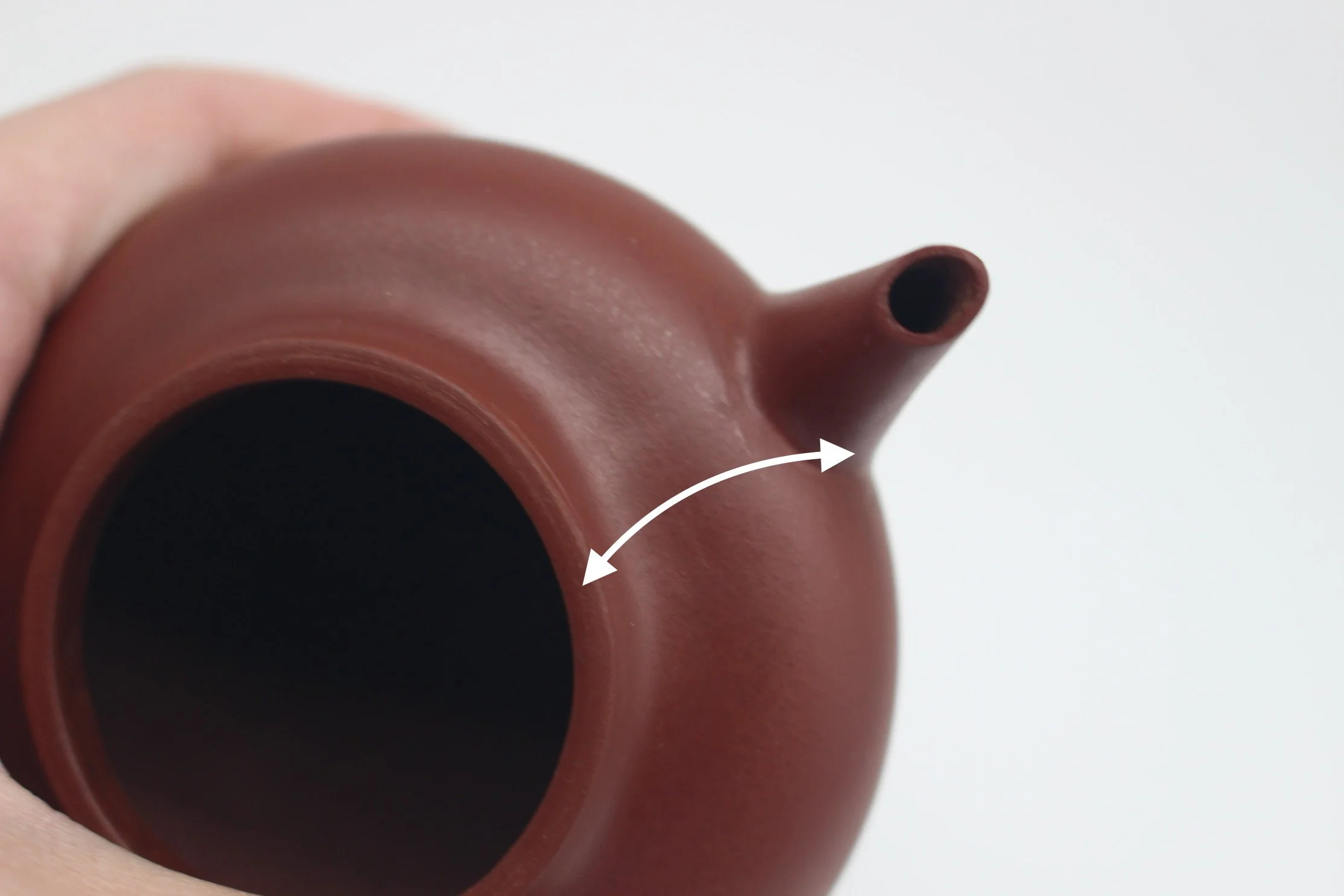
Half line , A/B line found at spout area. Lets check the other side.
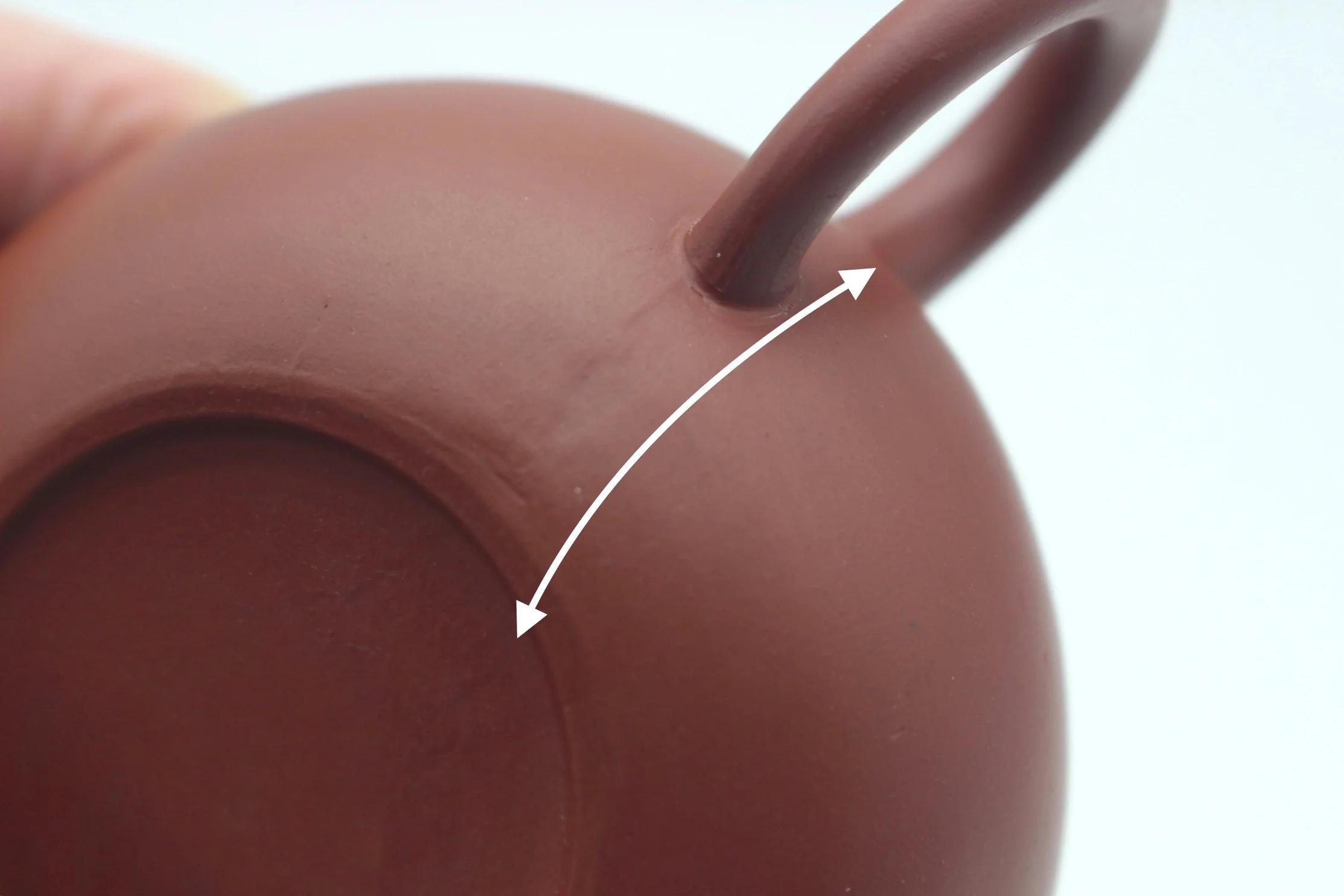
What do you know?
Another example.
This piece is less obvious but I would suggest to utilize the light if you are doing this. Also, feel it, touch it. The more you expose ourselves to these teapots (the good and the bad ones)the more you could get a feel of what I’m showing.
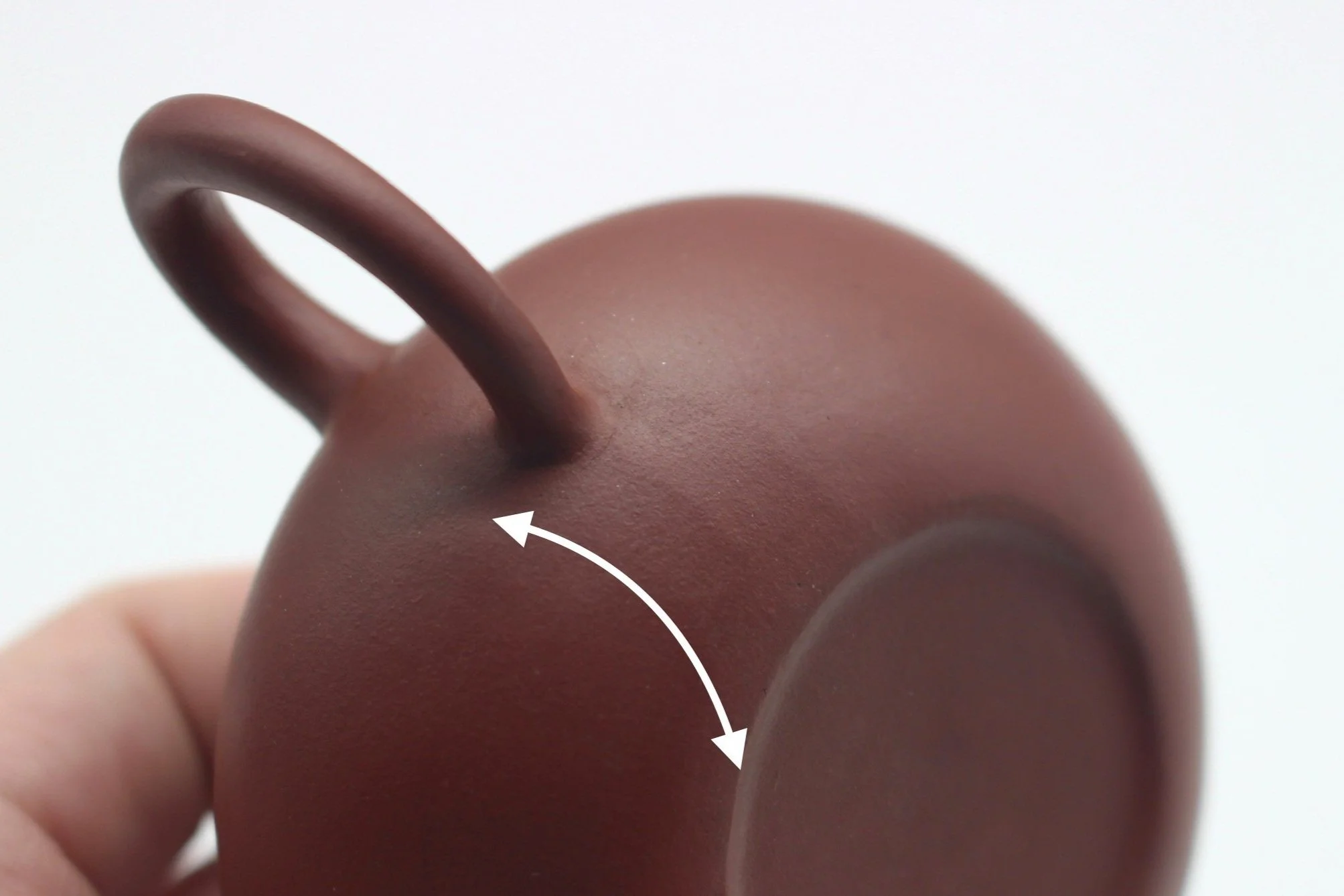
And…there ya go.
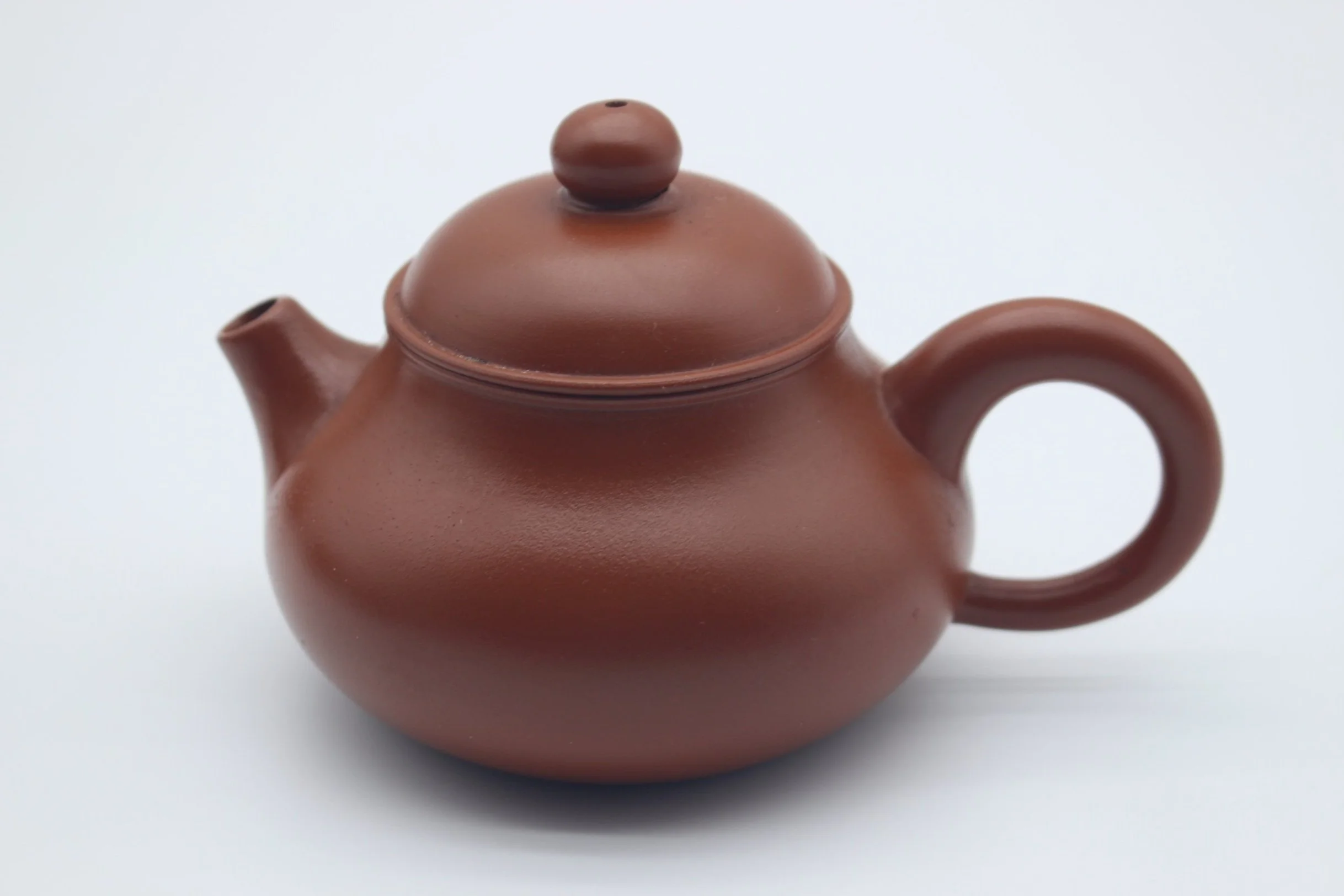
Now for this teapot it’s a little bit different. We will not discuss Shou La Pei Pot in-depth today but I still want to point out some of the more obvious hints from the glaze. But I’m sure most of yall could tell at this point that work like this is never quite desirable when you are spending even just 60-90USD.
This usually caused when the glaze was touched undried.
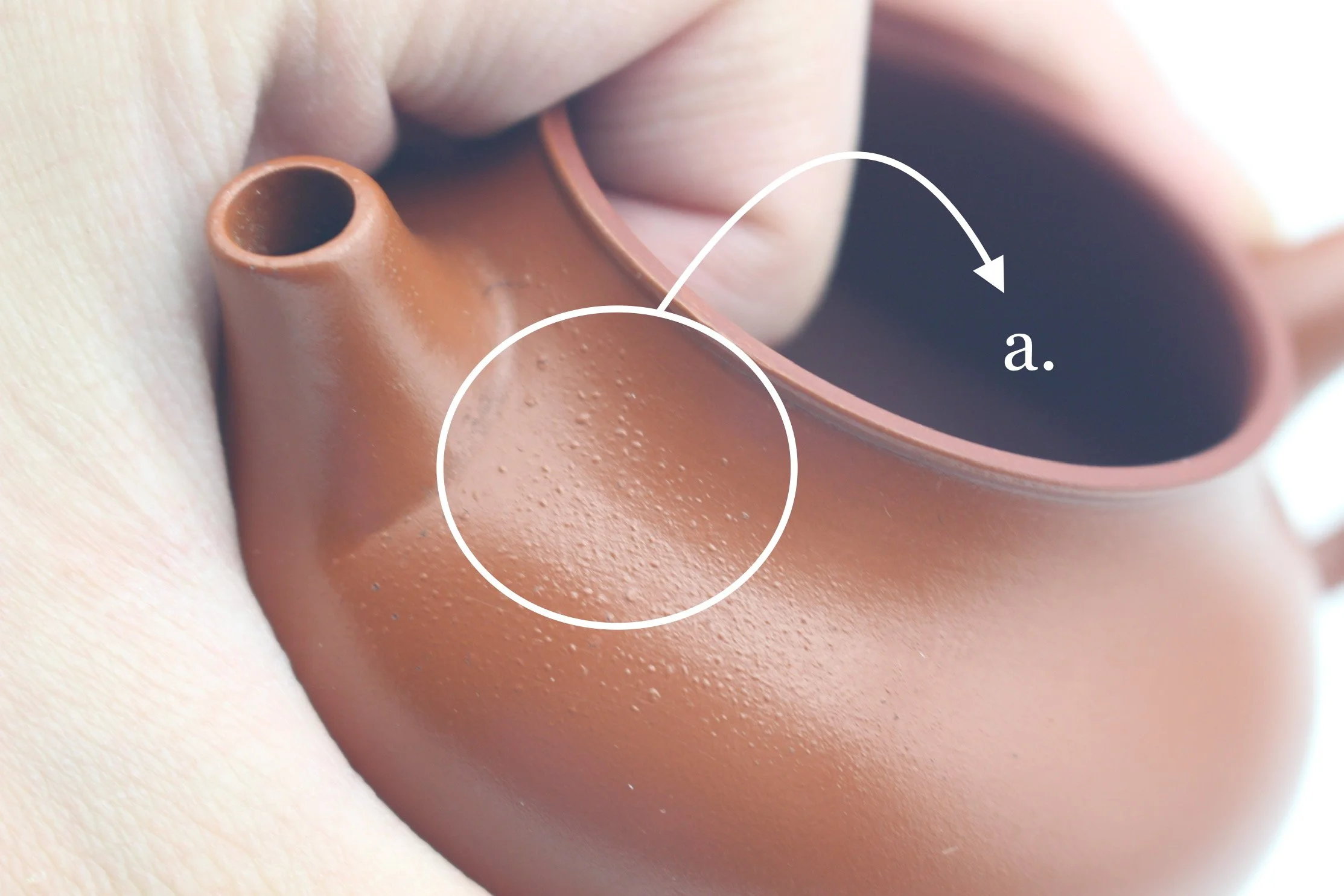
a.
This pretty much showed that it is not an early or whatsoever shou la pei since glaze back in the days is either dipped glaze or painted glaze. What you see here is a result of “sprayed” glaze. Not to mention the poor job done by the maker. Also, with a glazed layer like this, it might be harder for use to spot the A/B line. However, the poor job done on the exterior sprayed glaze pretty much gave it away.
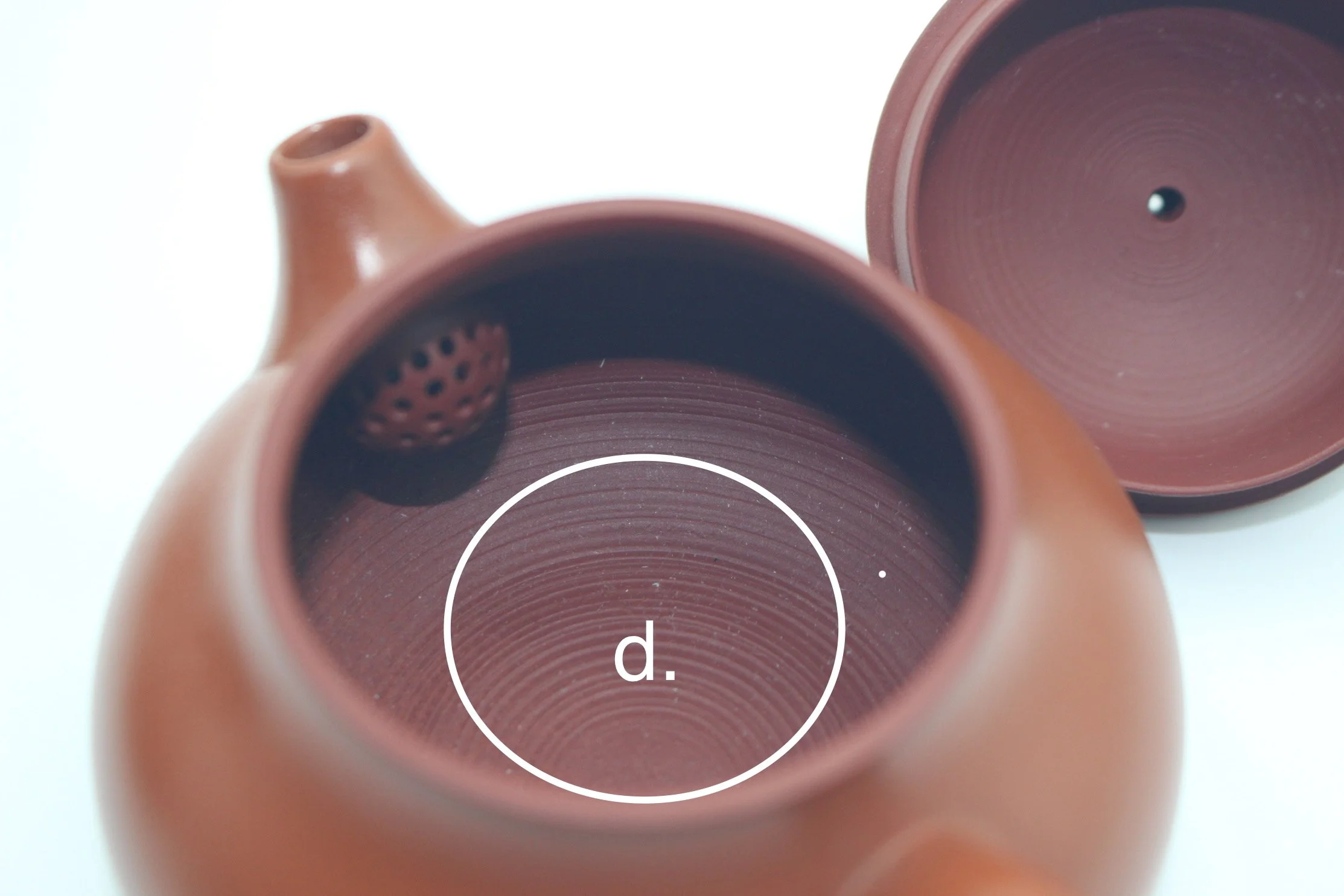
d.
Ill leave this as a open ended question. Why do you think this is touched up in such manner? Is it a standard procedure? or the craftsmen is trying to cover up specific traces left behind?
Okay guys ! sorry for the super long article, hope I did not bored you guys out with this one. Pretty sure we covered most of the obvious issues that I see from these teapots above. However, there is still something that I need to re-emphasize. I believe in the contemporary teapot market, 100% handmade is almost a must for many buyers. However, it really depends on the reason behind your purchase. (I personally think that this is extremely important). If a big part of the reason behind your purchase is for the craftsmanship, by all means, check that teapot! However, in the collector realms , it gets so much deeper than this and I hope I can slowly cover the different topics and details for different types of teapot/clay. Again, what I hope to achieve today is to have our fellow readers understand that the tools mentioned above are merely methods used for teapot making. The definition of “real” or “fake” should only be considered when a “title” was given to the product or in the product description. Meaning, If the teapots above are claimed to be” Early F1 handmade" teapots, then these would be categorized as “fake” items. We as the general consumer too, carries the responsibility and the needs to understand the reason and the outcome behind our purchase. I’m sure that no one wants to spend a big amount of money on something they do not have intention of purchasing. Lastly, DO NOT FOMO(Fear Of Missing Out) into any items without a good understanding of it. Remember to trust your seller if he/she has been consistently delivering quality products. I believe In the realm of Yi Xing stoneware, hands-on experience plays a vital role in identifying these beautiful artworks. With that being said, there are still plenty of details that are not covered today as it is simply impossible to explain everything in one article. I hope you guys find the information above helpful and hopefully we will be able to cover other topics in the near future. Have a great week ahead !